Bird Watching with Donald James MacPhee
Donald James, or DJ as he is known as by the locals, is a true ‘Ileach’ who has lived all his life here on Islay. He was born in Port Askaig and then moved to Keills. After his school years he began working as a gamekeeper on Dunlossit Estate and continued to do so for 40 years. Wildlife has always been a big interest of DJ. His other hobbies over the years have included playing for the local rugby and football teams and taking part in various running competitions. DJ has often been spotted running all around the island. He has run great distances all over the hills and remote areas of Islay. There won’t be much of the island he hasn’t seen! He has always thrived on the community spirit of the island and has been involved in many things such as volunteering for the local lifeboat and more recently a lot of the historical projects going on throughout the island. He has always been a busy and very active man and since retiring from Dunlossit Estate he has certainly not put his feet up and started to take things easy. He and his wife Isabel are now running a bed and breakfast as well as a business called ‘Islay Outdoors’ which he describes as being more of a hobby than work. DJ has an incredible knowledge of the island, not just Islay wildlife, but also the history of the different areas. Through his Islay Outdoors ‘hobby’ he shares his knowledge and passion with others as he guides them around our beautiful island. And it’s not only the visitors that benefit from his expertise, even the locals learn a lot of new things from DJ! Recently he took Emma and Catherine out on a walk around the farm and hills surrounding the distillery to look at Kilchoman bird life.
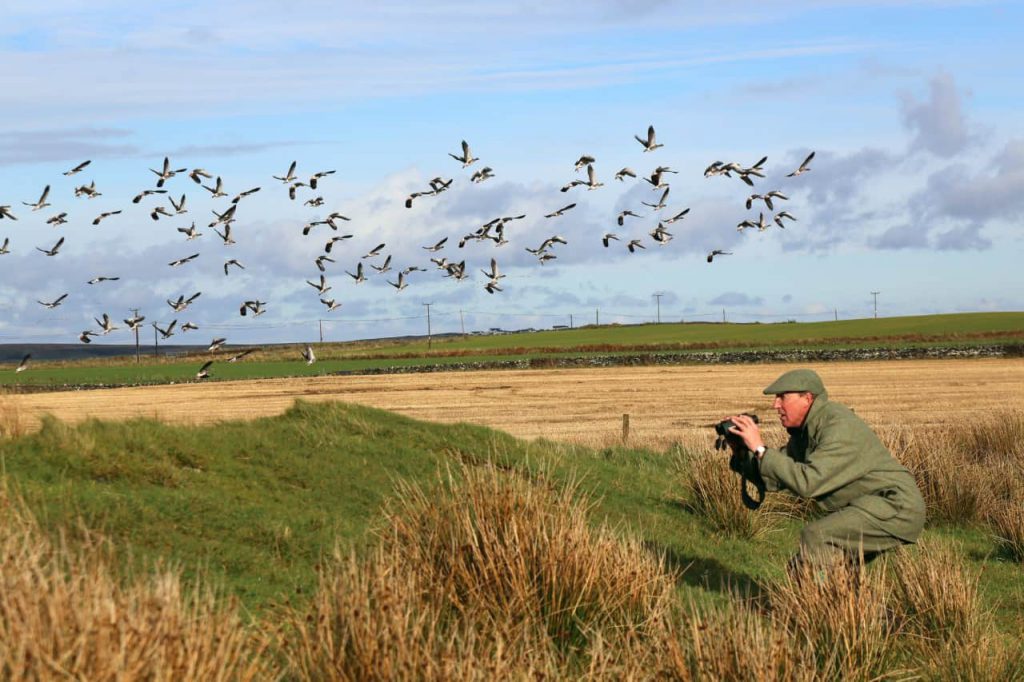
Islay is known as the Queen of the Hebrides and our island boasts a wide variety of amazing scenery and habitats, including wild open moorland and hills, unspoilt beaches and cliffs, mixed woodland and mudflats, all of which offer amazing birding on the island all year round. As well as tourists often visiting Islay because of their interest in whisky and our distilleries, many often come to bird watch.
Lots of people sent us questions through our social media to ask Donald James. He kindly took the time to answer a few for us.
What are the most common types of birds to be spotted around the Kilchoman area?
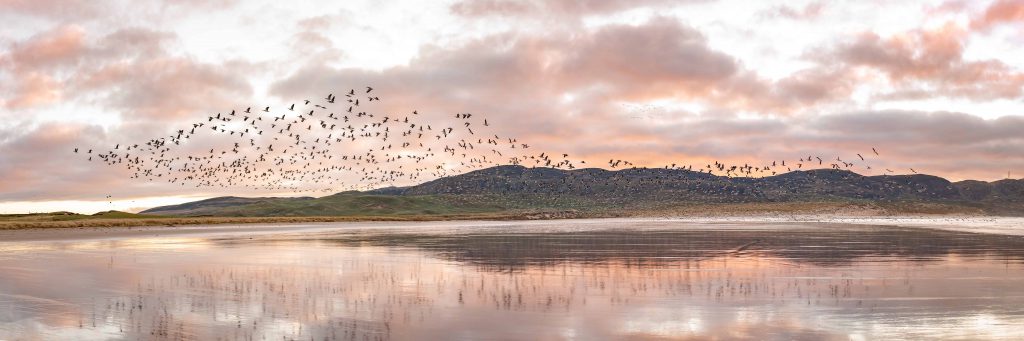
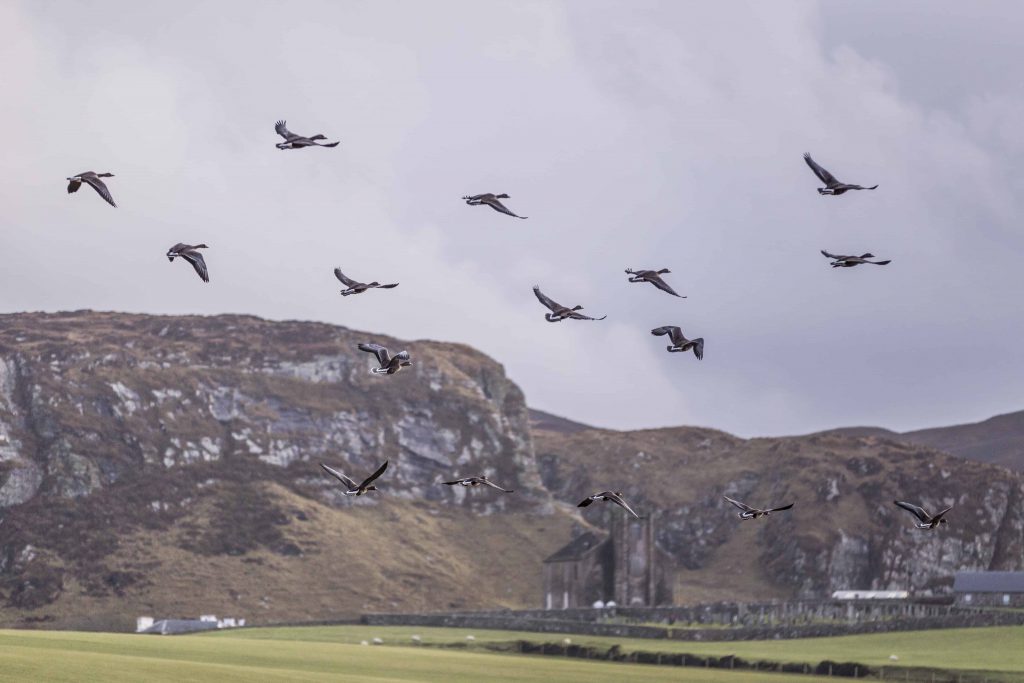
The most common bird you’ll see on Islay at this time of year is the Barnacle goose. There are several thousands of them that will settle here at Kilchoman. There is also the Greenland white fronted goose here wintering at the moment. The ones that are here throughout the year are the peregrines. There are also the falcons, they like the cliffs at the back of Kilchoman. We have a resident pair of choughs which used to nest in the distillery, but they now have a specially built accommodation at the back of the distillery. They are the mascots of the distillery really! Choughs are very rare to spot. In the summer we have the corncrakes coming and they are very popular with the tourists. You’ll find them in the grassy fields and up near the old Kilchoman church and cemetery.
Which type of geese do you have on Islay?
The barnacle is the main one. Then the white fronts, the grey lags, and even brent geese in Loch Indaal. There are some bar headed geese and some pink footed geese that also stop over. You get different ones stopping over for a short time. Canada geese are now moving in too. They have started to nest and are now beginning to stay on Islay.
Are there different birds spotted at different times of the year?
In the winter you’ll see the migratory birds, mostly the waders such as the geese. You can also see ducks in the ponds at the end of the road, you’ll see the wigeon, the teal, the mallard. They come in quite heavily in the winter. In the spring and summer time the corncrakes will come. They are difficult to see but you’ll hear them. You also have the lapwing and some curlews for example. There are a good variety of birds on Islay. On the edges of the cliffs you can sometimes see the merlin, although they are quite rare on the island now. I have even seen the kestrel down at Machir Bay beach but not often. The kestrels are on the decline now. They are not so common as they once were. You often see swallows and barn owls nesting in the surrounding buildings. There is a good variety. Islay is rich in birdlife.
What attracts the different varieties of birds to Islay?
The climate helps. For the winter birds we don’t get too much frost so they can still feed. The ones with long beaks stick their beaks in the ground to feed. The gulf stream helps a lot. We’ve got good farming. We’ve got grass that grows practically all year round so the grazing birds, the geese especially, will eat the grass because it doesn’t freeze. Then in the summer we’ve got a good variety of habitats. The lapwings for example like the open spaces to have their young. There is plenty of long heather which the hen harriers like to nest in as it gives them good coverage. It is the variety of the habitats that really suits so many different species of birds.
(photo by Ben Shakespeare)
Are there specific parts of the island where it is more common to see particular species of birds?
Yes, there are. Once you know the lie of the land on the island there are certain spots where it is more common to see certain species. You get to know where they tend to nest. With the eagles for example you know where they tend to nest and then when they fledge out the nests, they can be spotted hanging around the area with the juveniles until they are strong enough to go further away. It is the same with the harriers, corncrake and choughs. They will nest in the same type of area every year. It is the same with the corncrake and the choughs. They are in the same areas so once you know the lie of the land, they are easier to spot. There are rules to consider particularly during the breeding seasons. You are not allowed to go too near when they are nesting. You must stay a certain distance away because it is not fair to disturb them. But nowadays with good binoculars and telescopic cameras you don’t have to try and get so close to get a good view.
Which are the rarest birds on Islay?
Corncrake, chough and now grouse are all very rare. Even eagles are quite rare to see, there’s not that many of them around. You get all the different species sprinkling in through the winter, for example, the Icelandic gulls.
What impact do the birds have on the local environment?
Geese are having a big impact as numbers have increased so much. They are having an impact on the farmers as they are pulling out the grass and eating it. Farmers are not so happy with too many geese. It is all about sustainability and what the farmers can put up with and what they can manage. Different types of geese have been coming and going over the centuries but there are so many more now. The resident grey lag geese could be the next problem for farmers, including the growing of barley. They are big birds and their numbers are building up quite dramatically on Islay and the off-lying little islands. They will have between 6 and 12 chicks and they seem to look after them very well. There are not many predators for them. The odd eagle might take one of the young, but they generally look after them very well, so their breeding numbers could rocket out of control. They stay here all year round so they will be in the barley first, before the migratory birds even get here so that could be a problem.
Have you seen any changes in the amount/types of birds coming to Islay over the years?
The numbers of geese have risen since the 70’s. They have stopped hunting them here now, they are protected now so that has contributed to numbers increasing. The grouse numbers have gone down. You used to see a lot of red grouse. There would’ve been hundreds if not thousands on the island but now there is just a handful of them left. They think a disease got into their eggs or their bodies in the early 70s and it was killing them. The last black grouse I saw was on Jura. Also, the number of sea eagles has increased. I think they were introduced into the Isle of Rum in 1976 from Norway and they have spread down to Mull and now Islay and they are now often seen on Islay.
When is the best time of year to visit Islay for bird watching?
Quite a lot of professional bird watchers want to see the migratory birds when they are coming in or going out. They want to catch any oddities that might be among the migratory birds. Any that have maybe blown off course or got mixed up. Any time of the year really is a good time to see birds on Islay. Some species are here all the time, for example, the eagles and the harriers, they are here all year round. People come throughout the year for different reasons. Some people don’t come just for the bird watching, they might combine it with other things such as distillery visits or walking.
What are your favourite birds and why?
I like a lot of different birds for different reasons. I like the peregrine because it is such an iconic bird. It is the fastest bird on the stoop, it can get up to 175 mph! I like it because it is muscular and powerful. I like the Golden Eagle more than the Sea Eagle. The sea eagle never looks so pretty, it always looks a bit sloppy when it’s flying. Whereas the golden eagle is more graceful. The sea eagle almost looks like it is having a bad hair day, or a bad feather day! Their feathers are always a bit out of place. I really love the woodcock as a game bird, it is a lovely bird to see flying. I also like snipe and grouse. Being brought up as a gamekeeper you like different birds for different reasons. The lapwing is a lovely bird to look at, the wee tuft on its head. All the smaller birds are lovely when you see them up close. I love the skylark. I think it is the nicest sounding bird. Normally when you are cutting peats it is the only sound you can hear. I like the gannet because it is such a good fisherman. It is hunting all the time. They have different styles of fishing. The heron for example will stand for ages and ages, waiting until it gets something. The gannet obviously comes in from a great height. I like the osprey. We have one or two here. I don’t think they are nesting on the island, but they are migrating through Islay and starting to stay a bit longer. All birds have their own niceties in their own way.
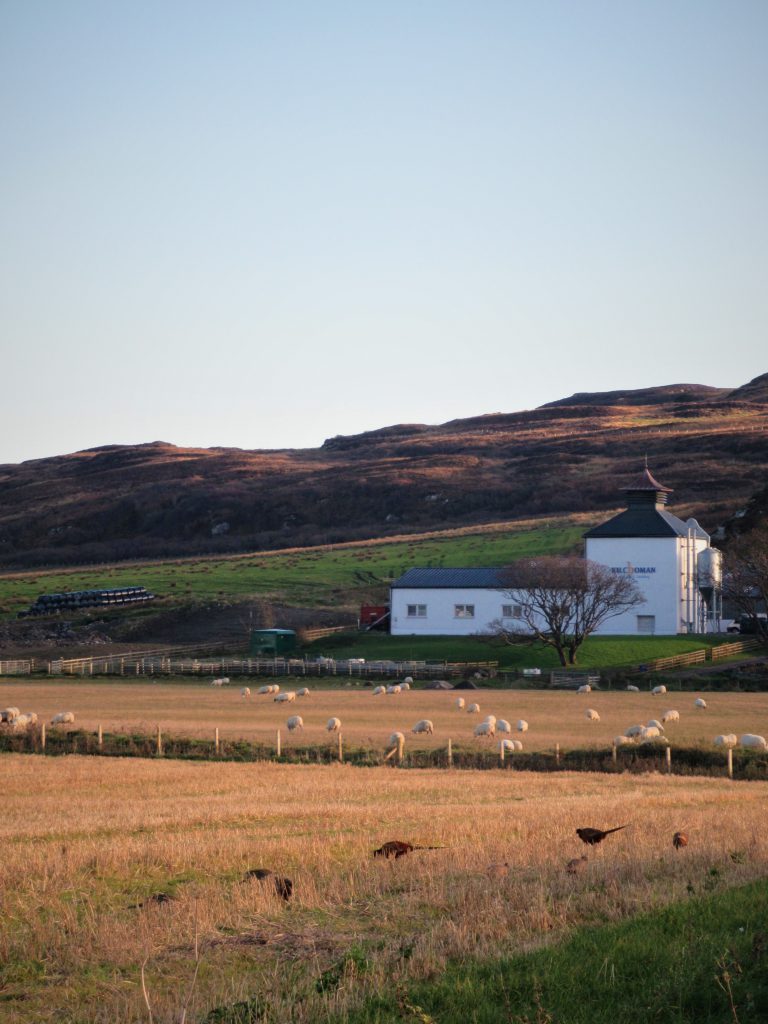
Thank you to DJ for taking the time to answer these questions for us. He is a very interesting man to talk to. If you are on Islay and would like to learn more about the history or wildlife on the island, you should spend some time with DJ. Click on the link below to visit his website for more information.
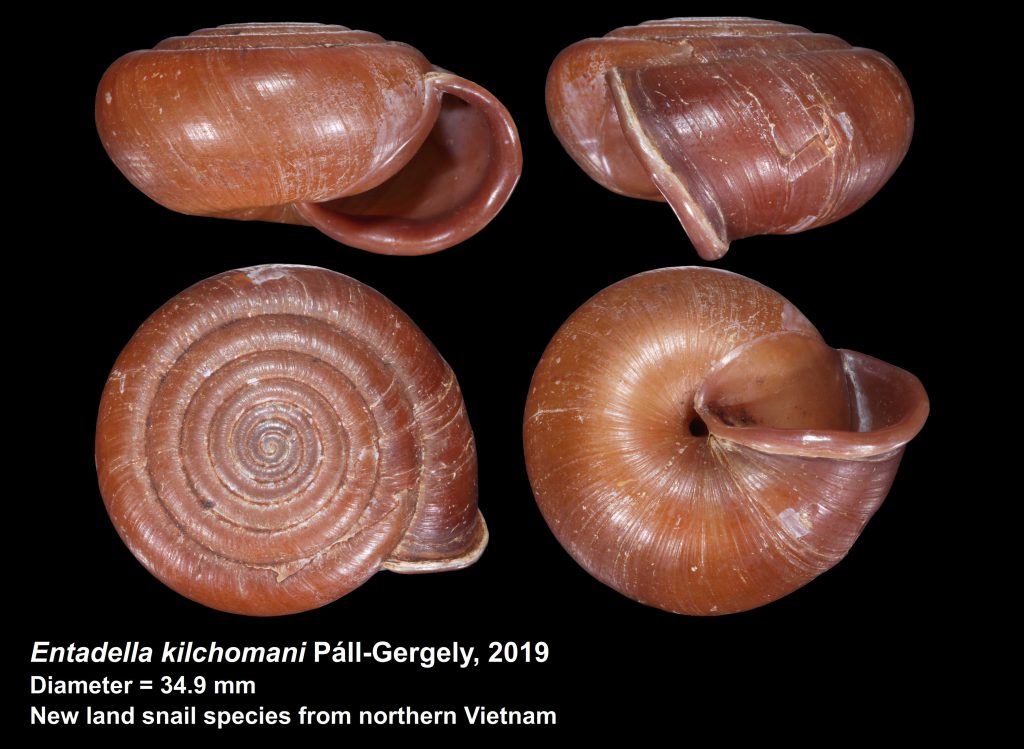
The name was chosen by Barna Páll-Gergely, a Hungarian biologist and Kilchoman whisky enthusiast.
The new species was collected by researchers of the Natural History Museum in 2013 in northern Vietnam. It has now been published by The Raffles Bulletin of Zoology, a well-known scientific journal of zoology in Southeast Asia, and published by a museum in Singapore.
Barna Páll-Gergely is a Hungarian biologist and whisky enthusiast currently carrying out postdoctoral research in the Plant Protection Institute of Budapest, Hungary.
As part of this research, he visits museums and collections where thousands and millions of specimens are stored. Some of them are identified and some of them are not. Barna examines the ones which are not identified yet, searching for species new to the science. His main area of interest is Southeast Asia (Laos, Vietnam, Myanmar) and southern China. He has discovered approximately 120 species new to science in the last 10 years.
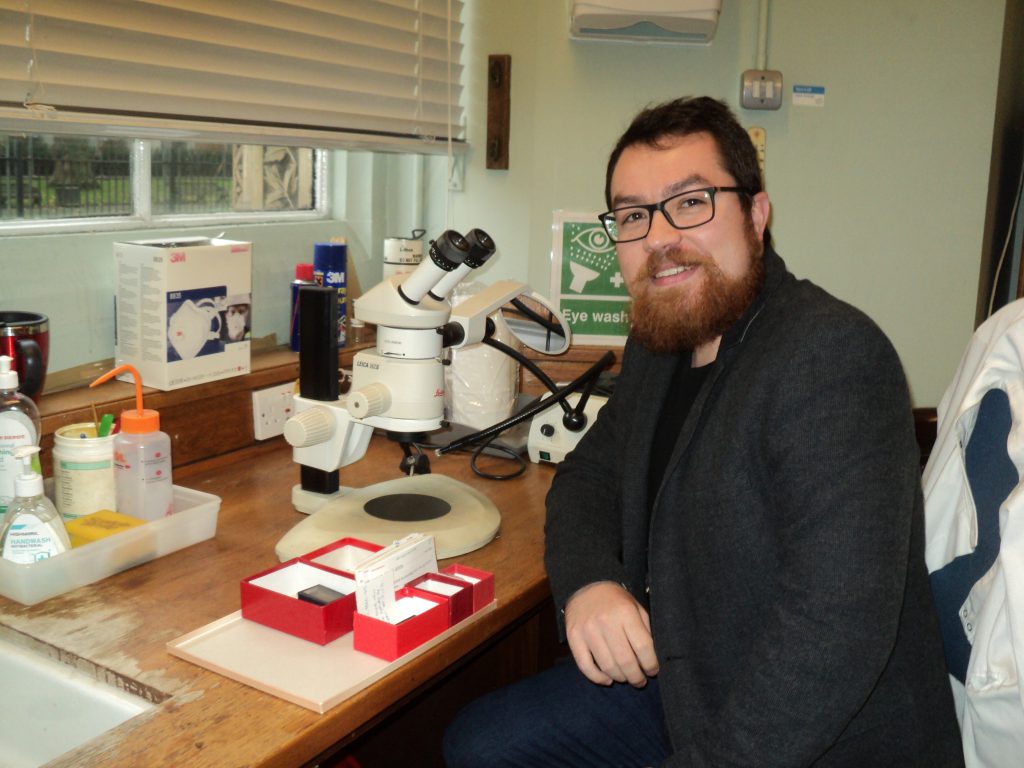
Photo: Jon Ablett
Barna visits the National History Museum in London practically every year because they have a wonderful historical collection. During field trips to Vietnam in the past couple of years, they have collected material which is full of new species. In this case, he found the unidentified snail preserved in ethanol in the London Museum. He already knew of four other land snail species which were quite similar to this new one (belonging to the same genus), but the differences were still prominent. So, he realized that this is a new species that had to be described formally.
The newly named Entadella kilchomani has a large and heavy shell, so we can assume that it has a long life span, probably longer than 5 years. We currently have no exact information about the diet or habitat but based on our knowledge of similar species, this new species probably feeds on fresh and decaying plant material in a subtropical forest. During the dry season it probably hides under wooden logs, stones or in rock crevices. It probably lays eggs into the soil during the rainy season. The new species was collected in Land Son Province, which is set in karstic limestone mountains and valleys and has a subtropical climate. The limestone mountains harbour rich land snail fauna and calcium-carbonate which they need to build their shells.
When asked his reasons for choosing the name he said, “I participated in two whisky tasting events in Budapest and I liked Kilchoman whisky and presentations very much. I now have a few bottles at home. I like that this is a small, family-owned company producing high quality spirits, so I decided to name a new snail species after Kilchoman Distillery to show my respect to the quality you provide.”
Thank you to Barna for choosing to name the snail after our distillery. We can now say we have our very own distillery Mascot! We’d also like to thank Barna for sharing the above information with us. Follow this link to read the full publication:
https://lkcnhm.nus.edu.sg/app/uploads/2019/01/RBZ-2019-0050.pdf
Kilchoman Distillery and ImpEx Beverages team up to spare consumers from paying Scotch tariffs
Last month, the Trump administration announced damaging tariffs on all Single Malt Scotch Whisky, leaving members of our industry wondering how this will impact their supply chain and their customers along the three-tier system. There is no doubt that Americans will purchase less Scotch due to the hefty 25% tariff, but Kilchoman and ImpEx knew that we could not just leave it at that.
“The tariffs are a big blow as in the last few years we have seen steady growth in sales. It is hoped they aren’t in place for too long so the impact doesn’t do long term damage.” Kilchoman Distillery’s Founder and Managing Director Anthony Wills wrote.
Recently quoted in Whisky Advocate magazine (and parent company publication, Shanken News), Sam Filmus, President and Co-Founder of ImpEx Beverages, explained that he “airfreighted 19 additional pallets of Single Malt to last through the holiday selling season.” As a boutique importer, he is “extremely concerned about how the tariffs will impact us, our suppliers, our prices, and, at the end of the day, the consumer that enjoys our whisky” Moving forward, Filmus and Wills agreed to swallow the cost of the tariffs, at least through next March, splitting it fifty-fifty to spare consumers from higher prices. “I think in the long run, it is going to be beneficial for the brand,” Filmus says. “[It will allow] more people to get a hold of the bottles they’re shopping for.”
Needless to say, a 25% increase is substantial for both companies’ profit margins, but Anthony and Sam– who will celebrate the 10 year Anniversary of Kilchoman’s launch in the US in 2020 along with 10 years of partnership– are focused on continuing the long term success of Kilchoman in the United States. There was no hesitation that stepping up for their customers at this time is the right call. These tariffs are the most recent reminder that the whisky industry is not immune to global political and economic forces, and the most recent opportunity for two leaders in our industry to come together and demonstrate their commitment to putting consumers first.
Please feel free to reach out to us with questions on these tariffs or anything else Scotch-related. We will continue to keep you, our Kilchoman community, abreast of any changes to the state of these tariffs. If and when they are finally lifted, well… we know how to celebrate.
~Anthony Wills, Kilchoman Distillery and Sam Filmus, ImpEx Beverages, Inc.
Notes to Editors
Kilchoman Distillery is a small family run farm distillery based on the rugged west coast of Islay. The distillery was established by Anthony Wills in 2005, the idea was to build a new distillery which took whisky production back to its roots. Anthony and wife Kathy have been joined by their three sons; George, James and Peter.
Kilchoman produces its 100% Islay Single Malt from barley which is grown in fields surrounding the distillery and completes every stage of the whisky-making process at the distillery, including traditional floor malting. Kilchoman is the only distillery in Scotland to do this.
Since the first US bottling was released in 2010, Kilchoman has quickly established itself as a high-quality Islay Single Malt Whisky multiple notable awards.
ImpEx Beverages, Inc. – In 2008, a new chapter began for Sam Filmus, after years in the business captaining JVS Imports. With ImpEx Beverages, his vision was to import premium and rare Spirits from around the world, with special emphasis on the best of what Scotland has to offer.
Now, ImpEx boasts an impressive portfolio, including some of the most notorious small to medium sized distilleries and independent bottlers.

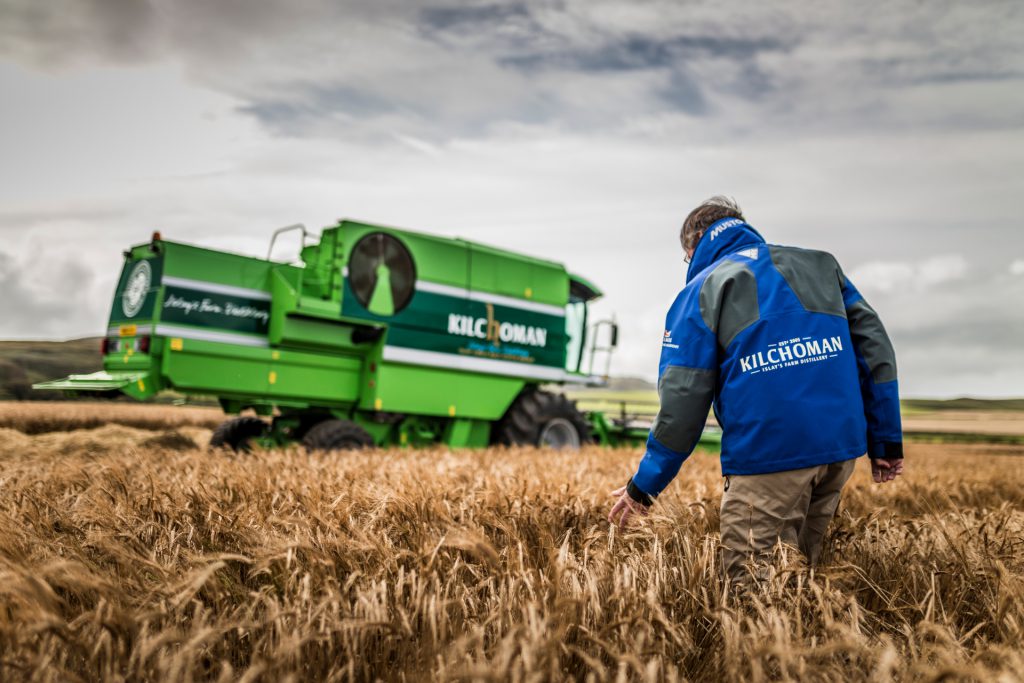
Can you explain some of the challenges of growing barley on Islay?
The main challenge is the weather. We don’t get as much dry weather as the east coast, where most Scottish barley is grown. On Islay there is a lot of wind and sometimes when the barley is ripening, we don’t get as much sun as we want. You need plenty of dry, warm weather and sun to ripen the barley properly but sometimes you don’t get that. The wetter, windier climate and shorter growing season tends to lead to a smaller grain size. But we aren’t too worried about this, the quality of our 100% Islay spirit is fantastic. The grain size largely affects the spirit yields and our primary concern is quality rather than quantity.
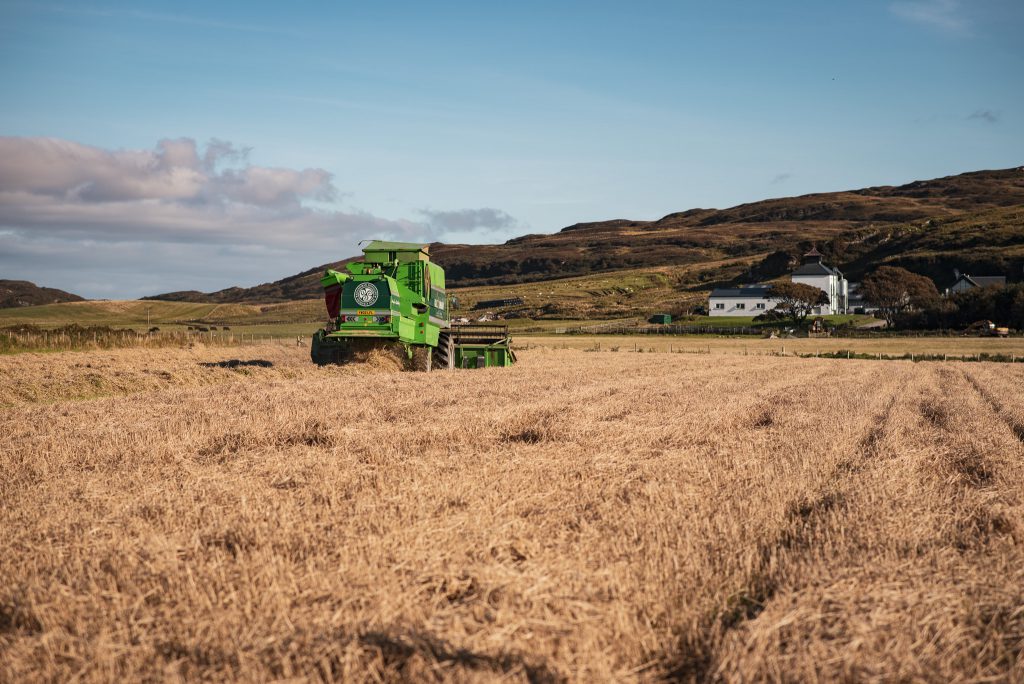
How do the Kilchoman barley yields compare to mainland Scotland?
We have a shorter growing season in comparison to farms on the mainland. We sow the seed later in the year and this is partly due to the geese not leaving until early April. We also have a wetter climate here on the west coast of Scotland and the ground can be cooler than some other parts of the country meaning that the germination and early stage growth can be slower. The main driver for yield is the climate as it tends to be wetter and windier here on Islay in comparison to the farms in central / eastern Scotland with generally cooler temperatures, this lowers the yields by up to ½ tonne per acre. The size of our grains also adversely affects our spirit yields by about 20-30 litres of alcohol per tonne of malt.
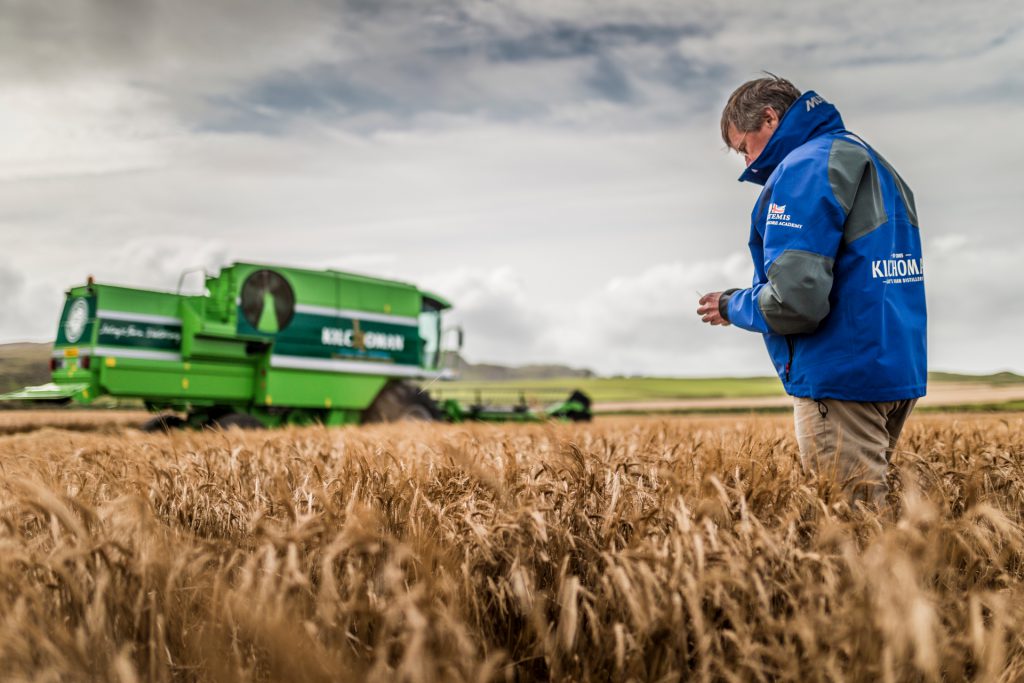
This year you grew Concerto and Sassy barley varieties, were there visible differences between the two?
There were significant differences in the size of the individual barley grains and overall height of the plant. We can only draw conclusions from this once we’ve put the two varieties through the production process, compare the new make spirit and see how those differences develop in the casks.
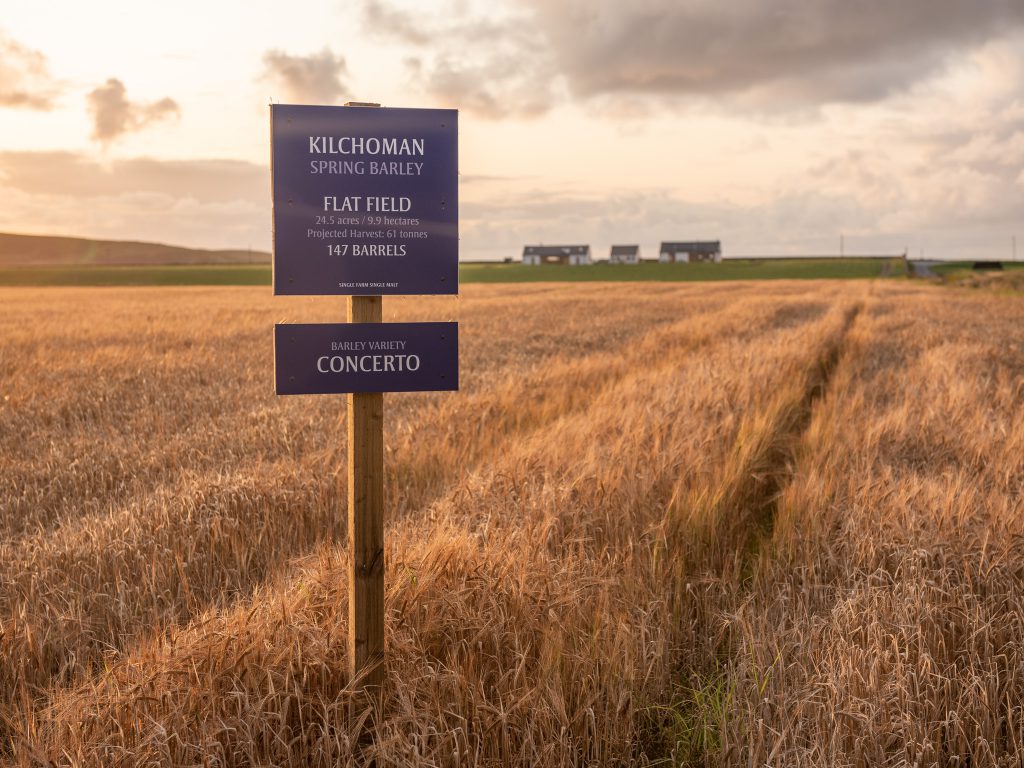
Does the variety of barley effect the spirit off the still?
That is something that we are looking at. We have started to distil the two varieties from our 2018 harvest, Concerto and Laureate, and early spirit runs certainly show there is a difference between the two varieties at the distillation stage. The Laureate has a more malted characteristic compared with lighter more floral Concerto spirit. How this translates into the mature whisky is the key. We hope to showcase this range with future 100% Islay bottlings.
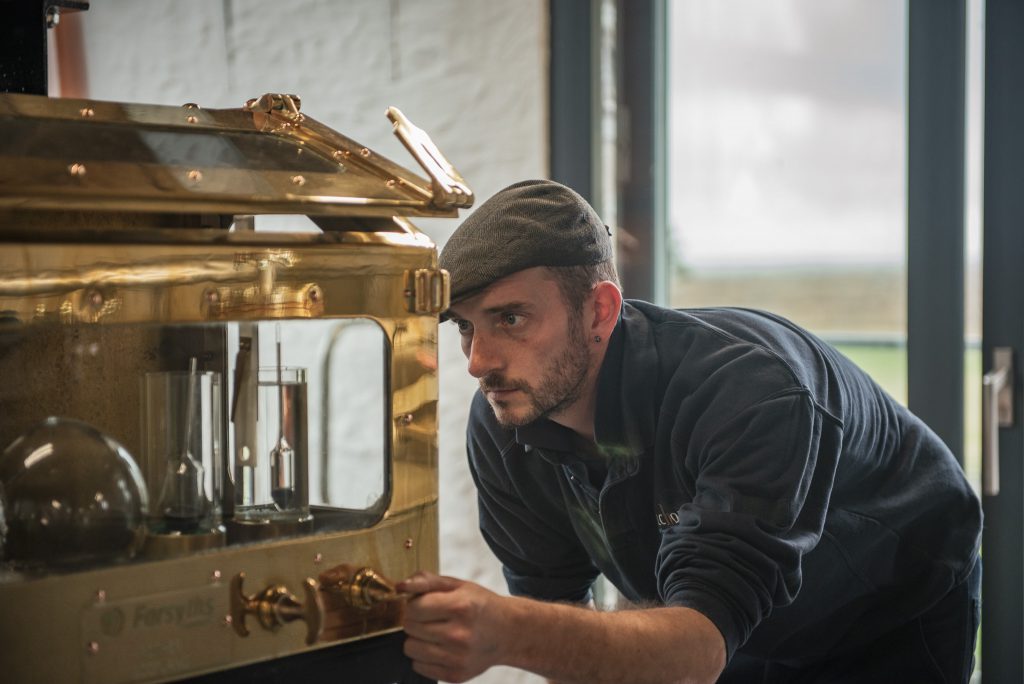
You have tried several varieties, but Concerto seems to be the main stay, can you explain the thinking behind this?
I think initially we wanted to follow the varieties that are used widely in the industry because we knew these were tried and tested. The yields play a part in the decision, but we crucially need a variety that stands up to the weather conditions on Islay, Concerto does this well. But they change every so often and we’ve tried to experiment with several varieties to find the optimum growing variety for our farm. I think since we’ve started, we’ve used four mainstay varieties in the 14 years that we’ve been in production along with other experimental batches. Of all the varieties we tried, Concerto has been one of the best performers in the field but most importantly it distils into a fantastically floral new make spirit which balances well with our other aspects that influence the character such as peat, stills, yeast and of course casks.
What are you looking for from a variety, is it yield or the ability to cope with the environment?
It’s a combination of both. We are looking for a variety that can withstand the weather conditions, but yield is important. I mean, everyone is driven to a certain extent by yields and costs of production has to play a part. However, we are prepared to be a bit more flexible on the approach we have, looking at the different varieties to explore the difference in flavours and aromas from the spirit after distillation and during the maturation process. The varieties we pick need to be on the books of the seed merchants and tested as a good variety for producing malt whisky. It’s then up to us to pick the best seed variety for yield, character and coping with the climate here on Islay.
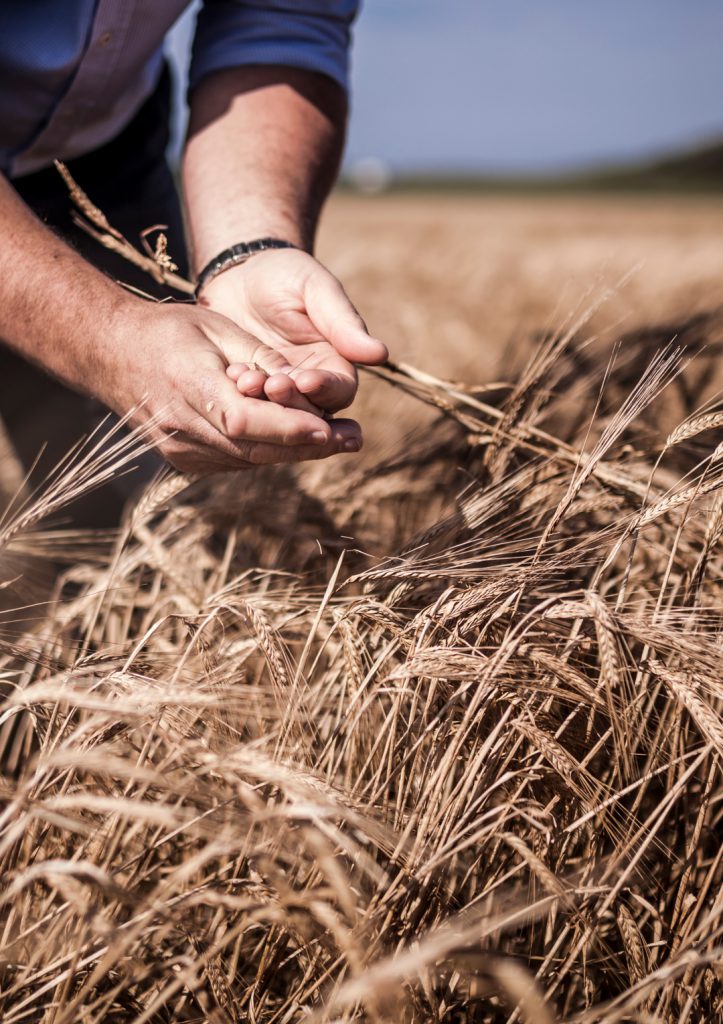
The 2018 crop is being distilled and the Concerto and Laureate varieties have been run through the stills. What, if any, differences have been found in the spirit?
The Laureate is definitely more malt and cereal forward compared to the Concerto which has boiled sweets and citrus characteristics. So yeah, there is a difference and that is significant as far as we’re concerned. It showcases that seed variety will have an impact on the spirit after distillation. It’s early days in trialling the different varieties through distillation but we’re excited about what we’ve found so far.
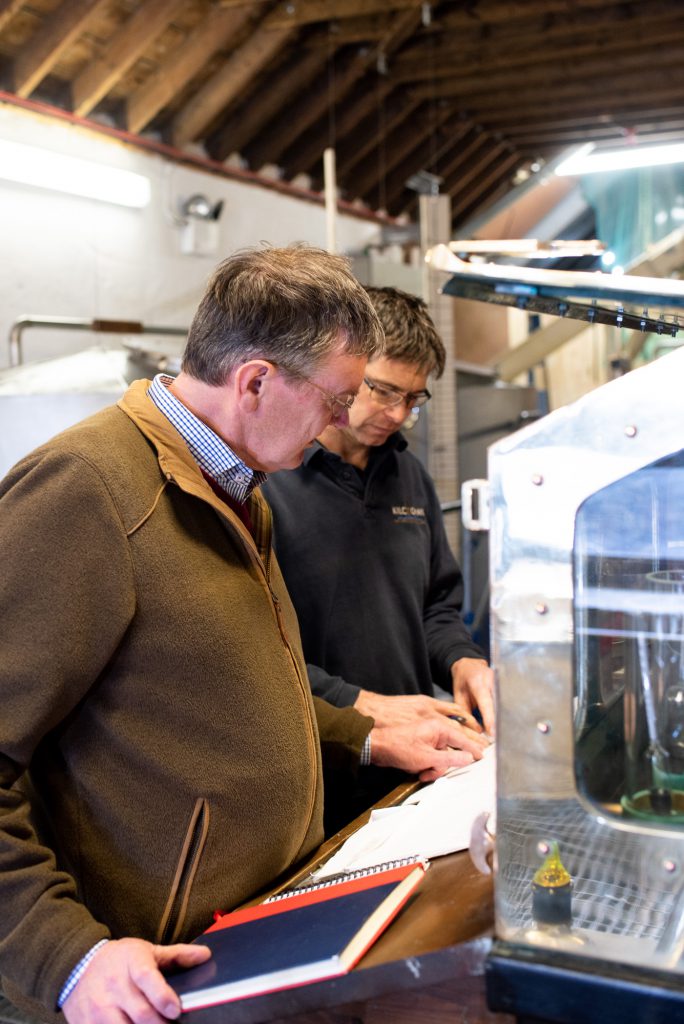
If the variety effects the spirit from the still, will this still be evident after cask maturation or will it be lost to the influence from the wood?
We have seen a fairly clear difference in distillate between barley varieties, however, we are yet to really explore how this develops during maturation. A lot will depend on the cask type and length of maturation. I am sure that some of this varietal character will come through with bourbon barrel maturation however, if we were to mature in a fresh wine or sherry cask then I think the bold flavours of the cask might negate the more subtle characteristics of individual barley varieties. Even with a very subtle difference we will be able to use this when putting together new whiskies to create another layer of flavour.
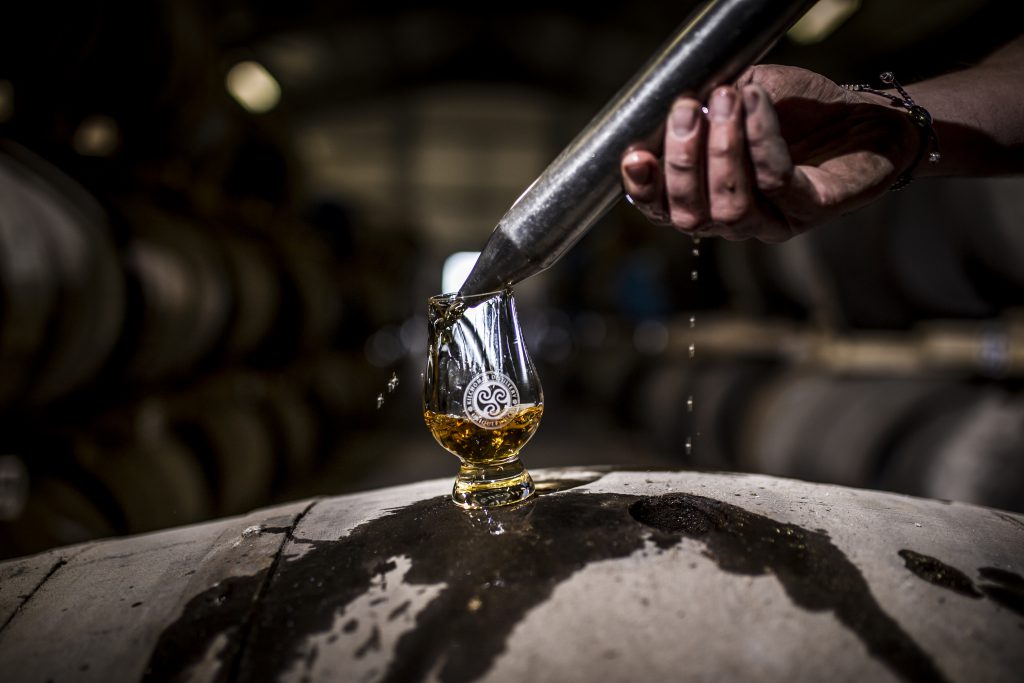
Are you planning on trying any different yeast varieties to see what impact this has on the spirit?
We’ve trialled many different yeast varieties and there are significant differences in the characteristics of the spirit, perhaps more so than the differences found with different barley varieties. With the exceptions of a period of initial experimentation, we have used Mauri yeast since we first started distilling in 2005. Mauri works nicely with our wort character and fermentation times to encourage the development of lighter floral and tropical fruit characteristics which contrast nicely with the peat smoke which is probably the more dominant part of the Kilchoman style.
I think, it’s useful to trial all sorts of different yeasts to see the different characteristics that come through. We recently trialled some Kerry yeast varieties, Kerry M and Kerry MX. Kerry M created a lot of stoned fruit character whereas MX had a distinct nutmeg note on the back of the palate.
Kerry and other varieties that we have tested are interesting to try however we’ve always come back to Mauri.
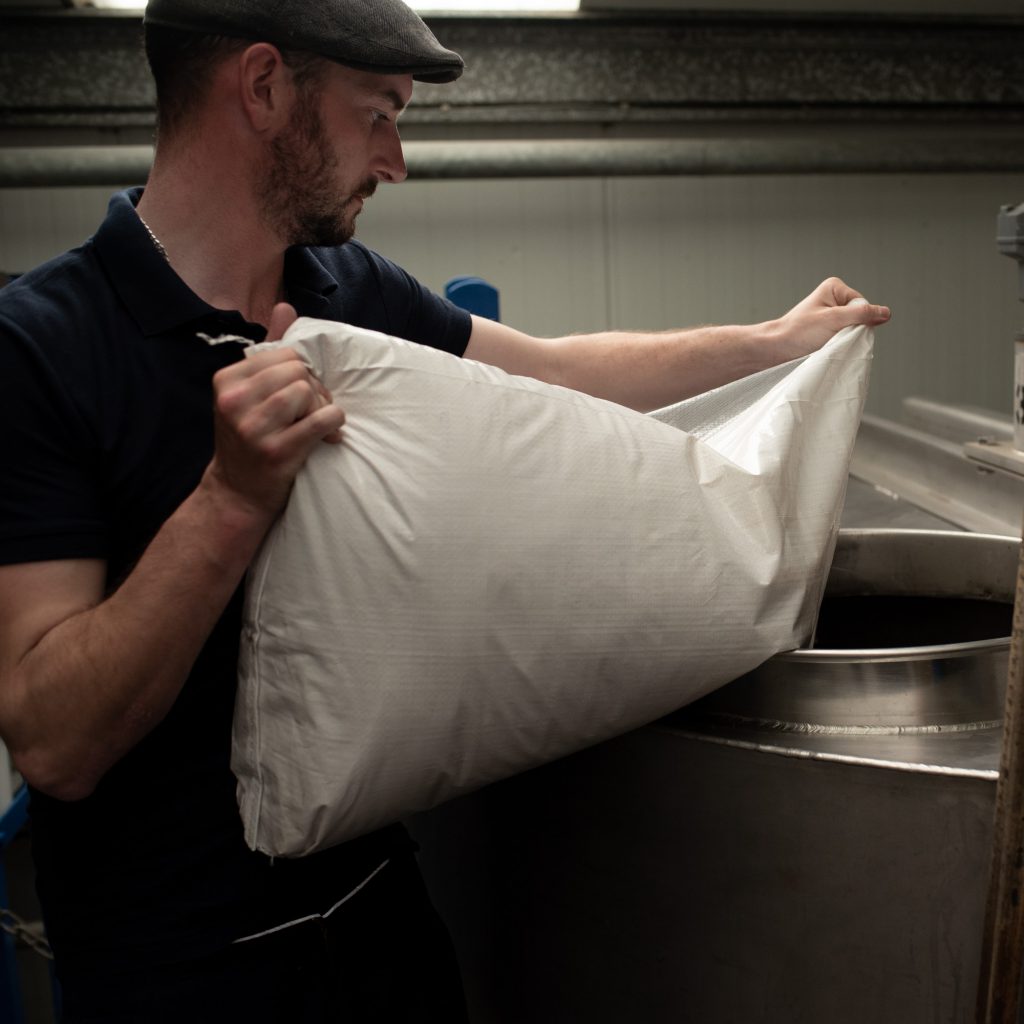
What are your future plans for barley growing? Will there be an increase/ decrease in the amount of Kilchoman barley grown?
We are growing more barley than ever now (about 200 tonnes), and I think we will get to a level that we can grow a maximum of 300 tonnes a year and that’s where we’ll sit. We want to grow as much barley as possible on the farm here at Kilchoman and keep the whisky-making process inhouse.
All Kilchoman barley is used in the 100% Islay range and to date, we have seen mostly sherry and bourbon releases. Are there plans to do any other barrel types?
There will be as we produce a bit more spirit and get a bit more flexibility, we will then experiment with different cask types and separate barley varieties as I mentioned before. At the moment, we’ve stuck with the majority in bourbon and a few in sherry as it showcases the spirit beautifully, especially in ex-bourbon.
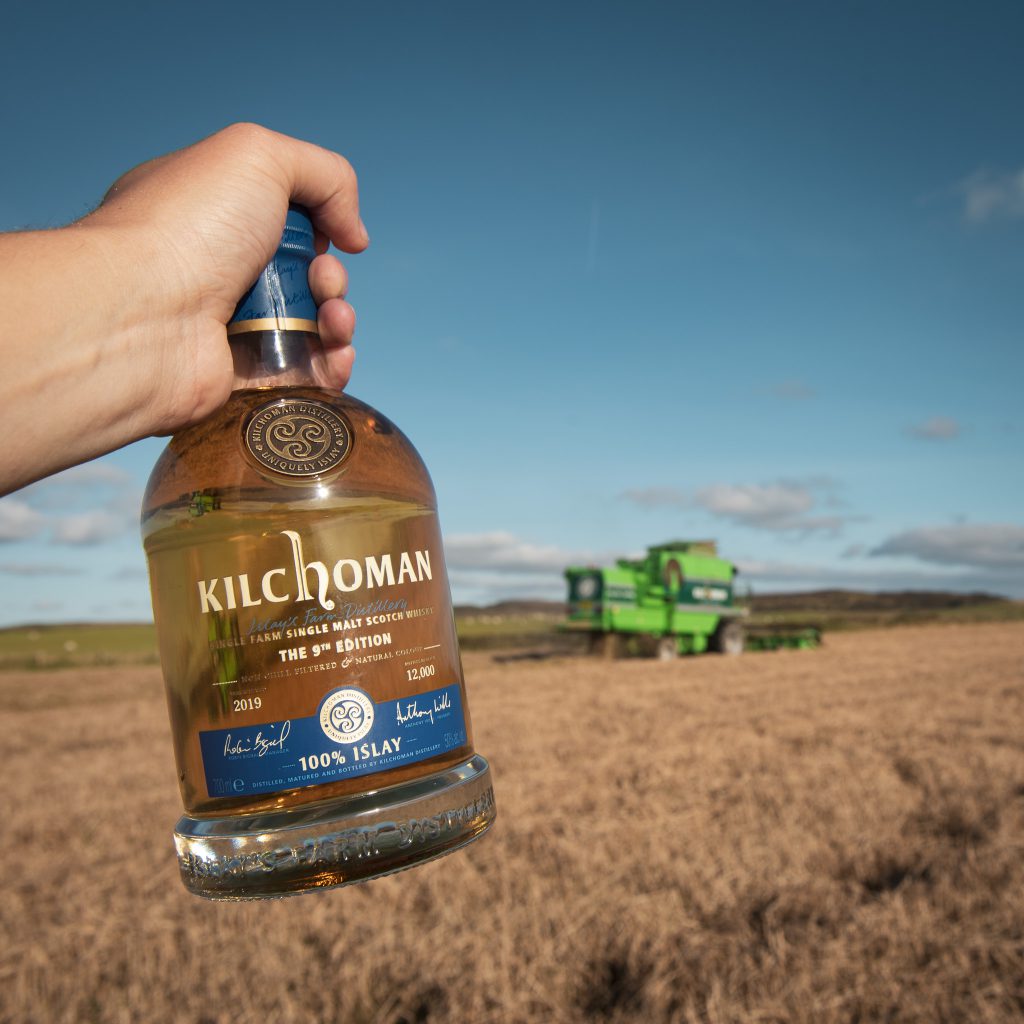
Currently the barley is peated to 20ppm in the 100% Islay range, do you have any plans do a cask filling with no peating, heavily peated or super heavily peated?
Yes, we have plans to do all sorts of experiments with our 100% Islay in the future. We now have the facility to do that with the new still house. We will do completely unpeated distillations and probably more lightly peated as well. We can’t go more than 20ppm just because of the timescale needed for peating in the kiln but changing the peating levels might be considered in the future. The new still house gives us a lot of flexibility in our approach to different styles and characters of our 100% Islay.
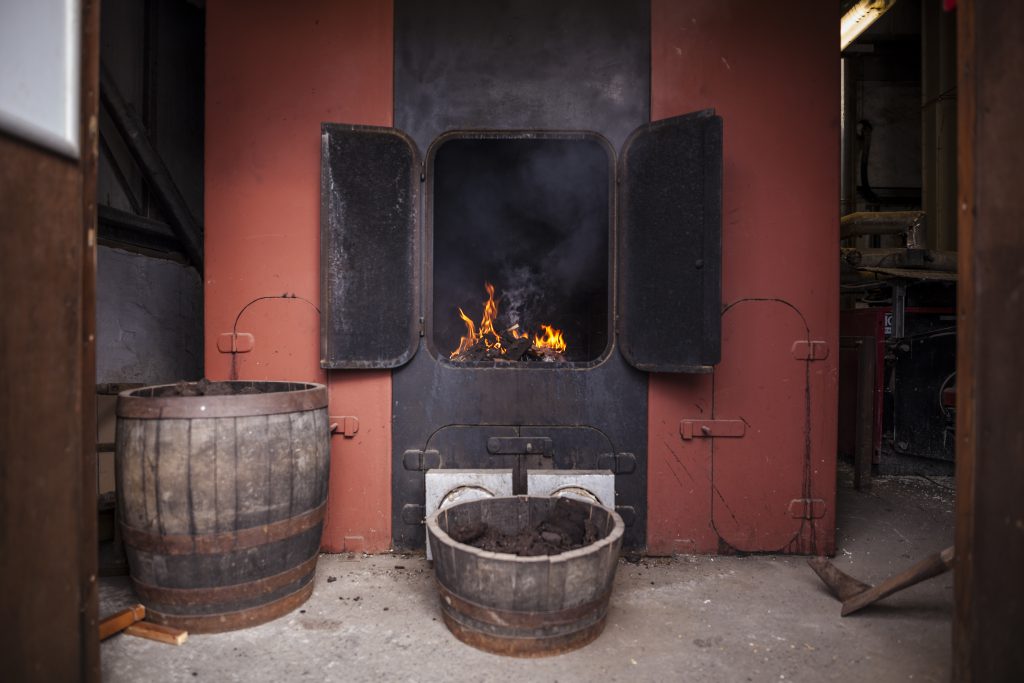
100% Islay range is released at 50% ABV, any plans for a cask strength release or to reduce the ABV to 46% to match the core range of Sanaig or Machir Bay?
I don’t think we will reduce it. It sits very comfortably at 50% and it can take that additional strength. Yes, we will look at cask strength releases but with the limited amount of stock we have, we have to be careful not to be short of stock going forward. But yes, the cask strength variety will be something we will do in the future.
Any plans to use Kilchoman barley in the core range products of Machir Bay or Sanaig or perhaps in one of the annual releases like Loch Gorm?
No, absolutely not. We want to keep them separate. We want to showcase the Single Farm Single Malt approach that we began right at the start. It is unique throughout the whole of Scotland and we wouldn’t want to take away from any of the 100% Islay spirit we can produce from barley grown and malted at Kilchoman.
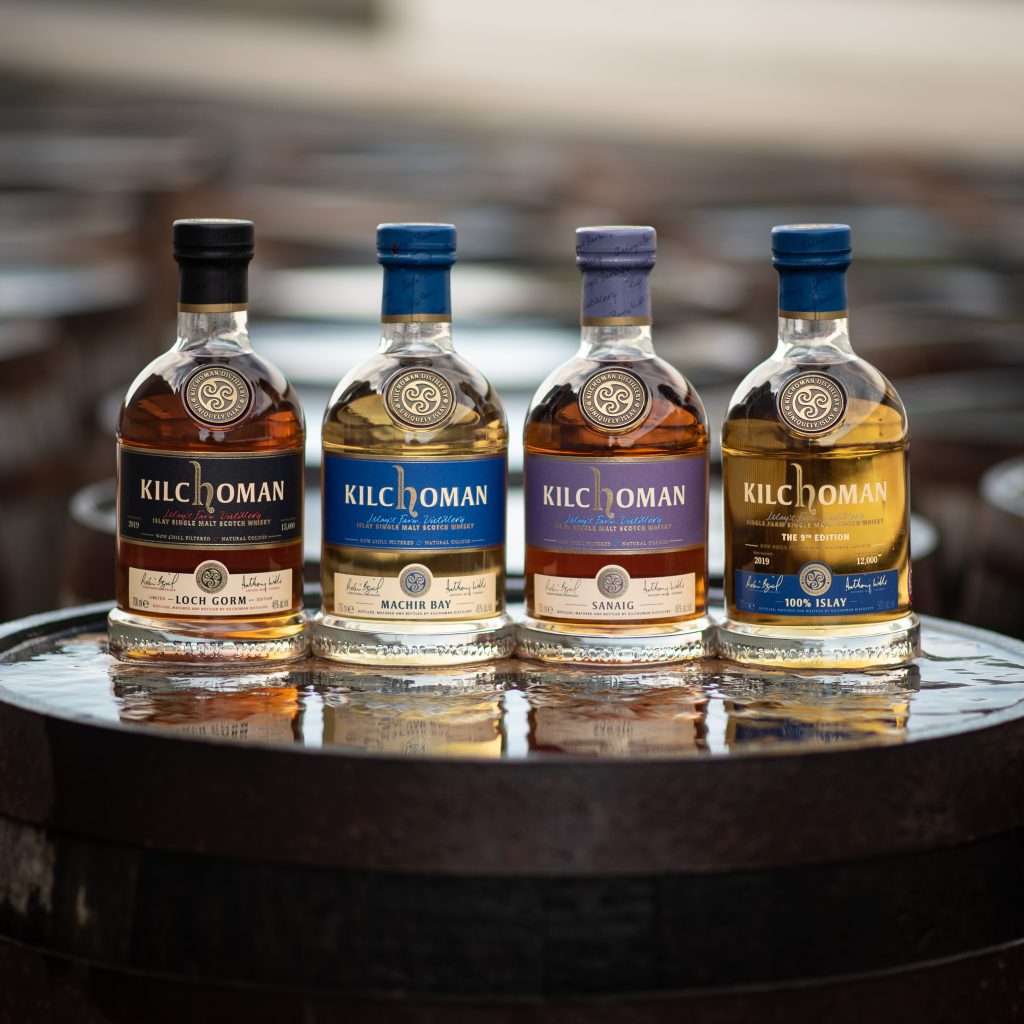
How is your combine driving?
Well, for some reason, they kept me away from the combine harvester. Not sure why. They seem to be combining when I’m not actually on the island. Maybe that’s deliberate! But I’ve always told them it’s just like mowing the grass so I’m not sure why I haven’t had a go yet…
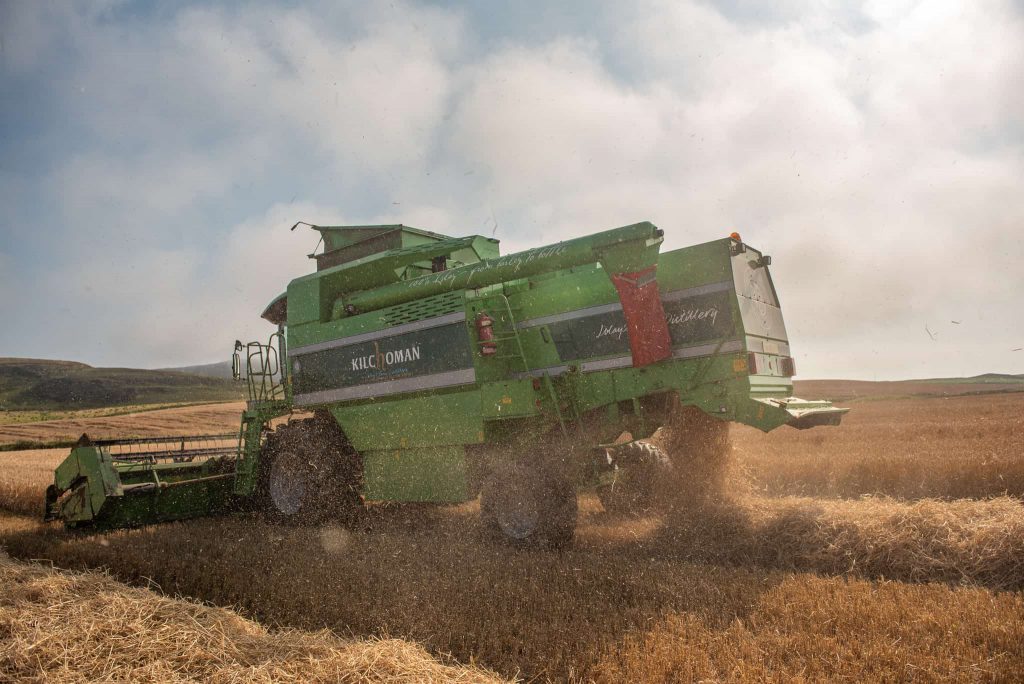
When my father had the idea of building Kilchoman he wanted the distillery to echo the shared history of farming and distilling on Islay. These two ancient arts had been completed in partnership on the island for hundreds of years however, as the industry commercialised in the late 1800s and trade with the mainland became more reliable, most of Islay’s self-sufficient farm distillers either merged or closed.
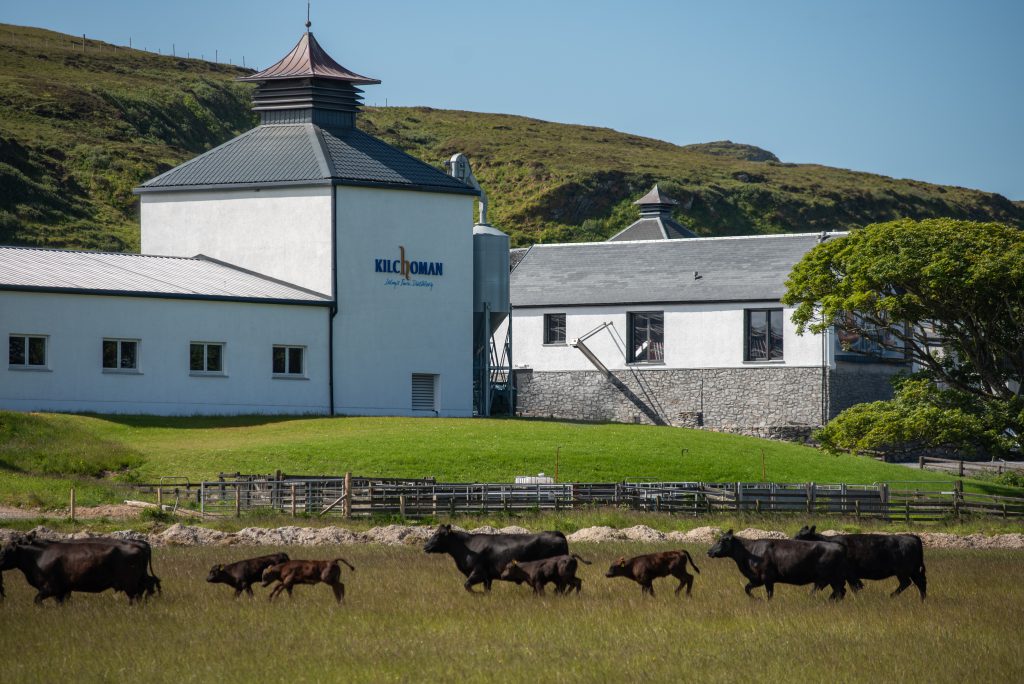
In the early 1800s the number of excisemen on Islay increased dramatically, forcing the illicit distillers to either register as fully licensed distillers or face imprisonment. This created a spike in the registration of distilleries with many partnering with farmers who grew barley, had access to reliable water sources and in many instances also had redundant buildings to house maltings and still houses.
After an initial boom in registered distillers, numbers fell from 20 in mid 1800s to just 8 by 1881. Despite a number of challenging periods, particularly in the 1980s when Port Ellen distillery closed, whisky production increased dramatically between 1981 and the 00s. Notwithstanding this, no new distilleries were established for 124 years. That was until 2005 when my father had the idea of winding back the clock and converted the disused buildings at Rockside into a traditional farm distillery reminiscent of Islay’s early lost distilleries.
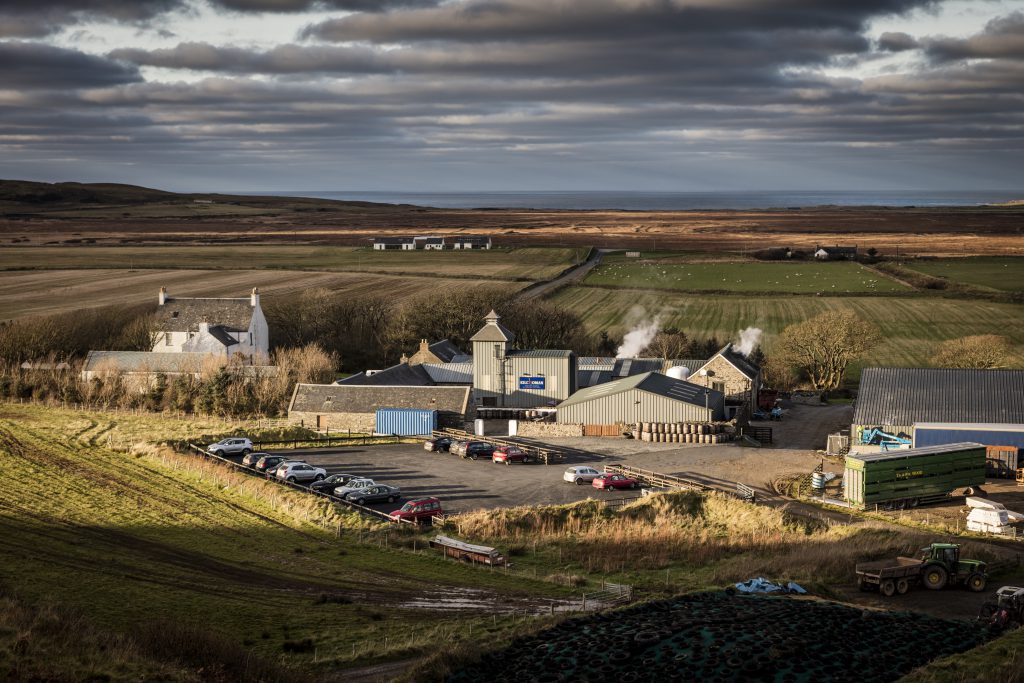
Here at Kilchoman we produce our 100% Islay range in an almost identical way to the farm distillers of the early 1800s. The ground surrounding Kilchoman is one of the most fertile pockets of land on the Islay, allowing us to harvest over 200 tons of barley whilst setting aside ground for regeneration and local wildlife. This barley is then malted in our malt house before being distilled, matured and eventually bottled all on the farm where the barley was first sown.
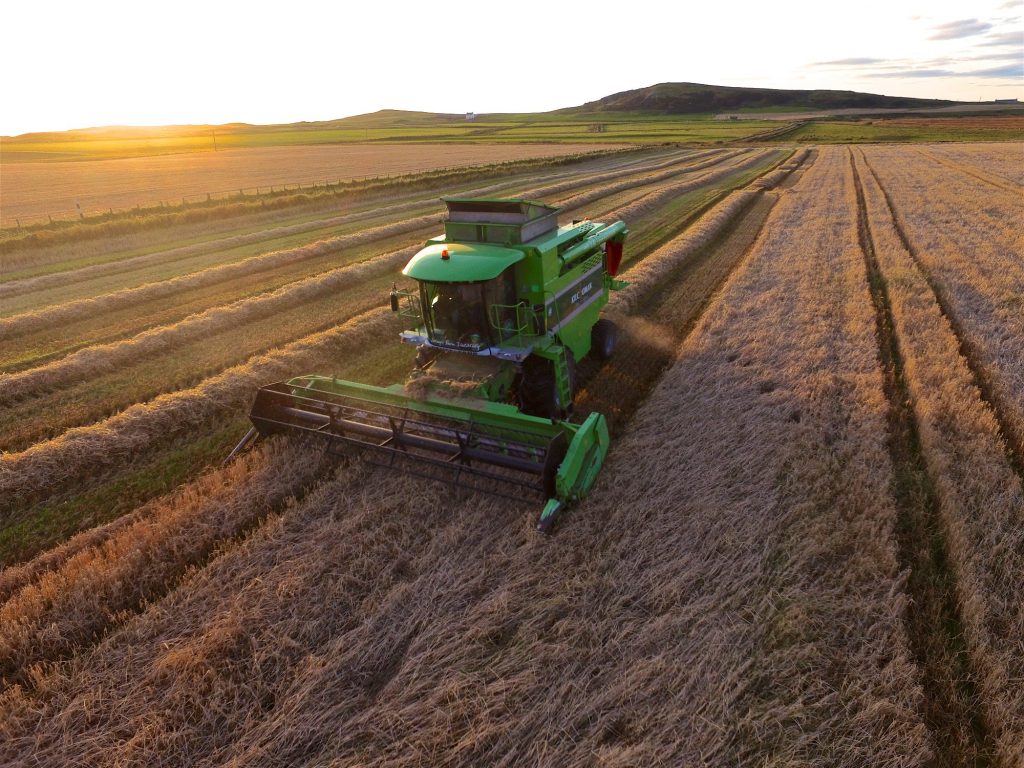
The synergy between farming and distilling go far beyond just barley however; our draff (the outside skin of the barley), discarded during the mashing process, is used as feed for our herd of Aberdeen Angus cattle. Draff is a crucial part of the cow’s diet, increasing meat production, stimulating rumen activity and promoting increased feed efficiency.
Our only other waste produce, pot ale (the remnant liquid left in the stills after the alcohol is boiled off), is spread on our pasture as fertiliser, allowing our flock of sheep to also enjoy the benefits of living on a farm distillery.
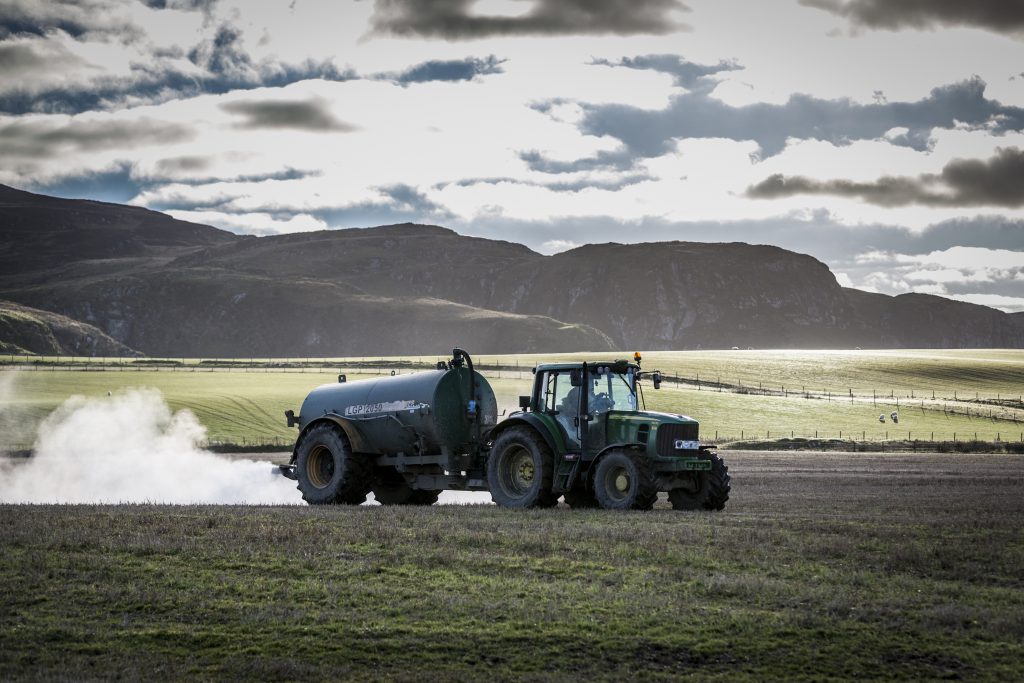
So, next time you visit us, enjoy a dram (of course!) but then take a walk through our barley fields, peek in the windows of the malt floor and keep an eye out for our livestock, they tend to be found near Machir Bay taking in the view whilst enjoying the latest delivery of warm draff from the still house.
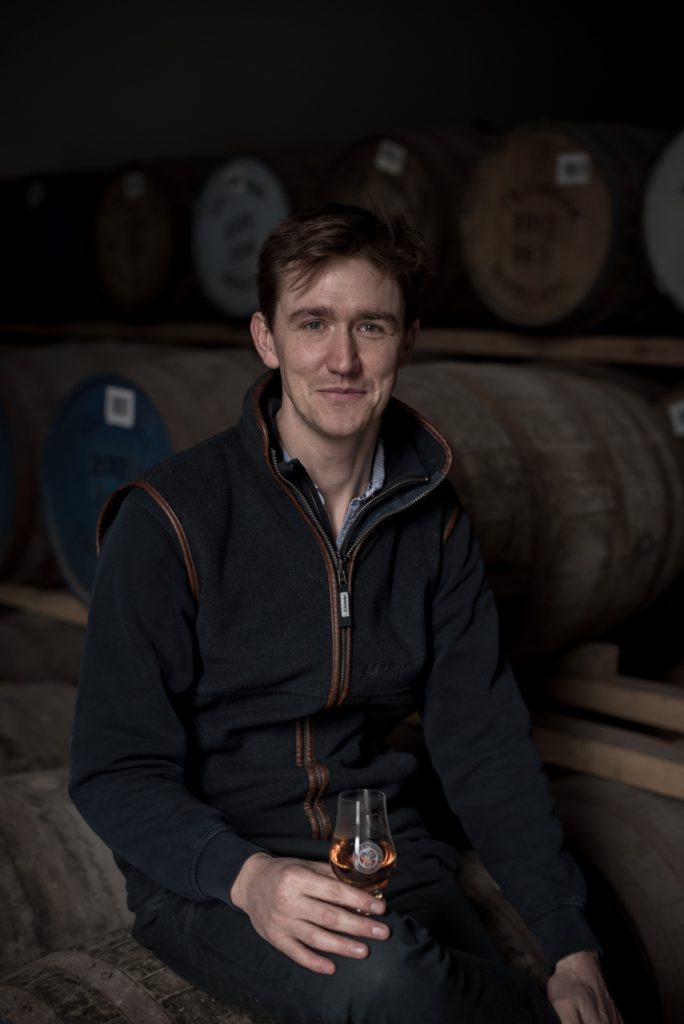
James Wills, Sales & Marketing Manager of Kilchoman Distillery
Kilchoman Distillery has a unique story, founded in 2005, it was the first distillery to be built on Islay in over 124 years and the only farm distillery on the island. Known for our traditional approach to whisky making, from barley to bottle, there are many questions that come our way, however there is one question that is asked so often – ‘how did you do it?’. So, I decided to have a chat with the man who knows exactly how it was done, Anthony Wills – Managing Director and Founder of Kilchoman Distillery, who turned many whisky drinkers dreams into a reality…
The Beginning
Anthony Wills has worked in the drinks industry for 40 years, over 20 of which have been spent plying his trade in the single malt whisky industry. Before dreams of Kilchoman were flowing through Anthony’s mind, he entered the whisky industry as an Independent bottler in the mid 1990’s, bottling casks from many of Scotland’s fine distilleries, learning his craft in wood management and cask maturation, something very important to Kilchoman today.
As a relative newcomer to the world of independent bottling in the early 2000’s, Anthony was unable to source many of the high-quality casks he was searching for. As the demand and intrigue at the premium end of the market was starting to grow, a lot of the distilleries he worked with began to hold onto their stock rather than releasing it into the open market. This is when the seed was first planted in Anthony’s mind, if he couldn’t get his hands on the whisky he was searching for, then he would go ahead and make it himself!
The Idea
With the idea of making his own single malt whisky now firmly locked in his mind, the long journey to establishing Kilchoman Distillery began. Anthony understood the market by now and knew there was a thirst for something different, an opening for a new distillery, although many questions were still unanswered; The location, the style, the size, and of course, to raise the funds to build this new distillery. “There was no doubt that I had the confidence I could take a new single malt to market, there was a demand out there for a premium non-aged single malt but getting there was a hugely difficult task. The finance alone was daunting, not really being able to know for sure how much we needed… Most people thought I was completely mad!”
Anthony had always felt there had to be a point of difference, a unique way of producing a whisky like no other. “There was no point in building a distillery like every other in Scotland… and I had always been fascinated by the history of farm distilling in Scotland”. From this came the long planning and building of Islay’s only farm distillery, where barley could be grown and the whole whisky-making process could be shown on one site. “To me, that is what Kilchoman is all about, we are telling a completely different story to the mainstream distillery’s, something special”.
The Location
To many outside the whisky industry it’s a mystery how a small island on the west coast of Scotland has so many distilleries famous throughout the world. Islay is an iconic brand for single malt whisky, with the island’s reputation and the family’s historic connection to the island (a story for another time), it was the obvious choice for Anthony and his family to locate the distillery on Islay, a decision he is still very thankful for today. “There is no doubt in my mind that the single most important decision we took was to locate the distillery here because of Islay’s unique brand image around the world”.
It was then time for the next big decision – where on the island to build this distillery? Knowing Islay well already, it soon became clear there was only one place suited for this farm distillery. 5 miles down a single-track road you reach a small farm yard, nestled below the cliffs, surrounded by some of the most fertile land on Islay and the historic Kilchoman church just next door. “We knew we could grow good quality malting barley from these fields.”
Changes over time
Fast forward 13 years and Kilchoman is thriving, the distillery is currently expanding to allow for an increase in production to satisfy demand. “Where we are now is unbelievable, I would never have imagined we would ever have been where we are now – I just had an idea that this type of distillery would have an appeal with a wider audience around the world; a small bespoke, farm, family run distillery had a place in the market”.
The industry has changed hugely in recent years, 25 years ago, only 3-4% of all scotch whisky (blends included) sold around the world was single malt, now it’s over 10%, which is a huge increase. “timing in this world is everything and we got that absolutely spot on in terms of the market and enthusiasm for experimentation in single malt”.
Kilchoman Distillery may have struggled to survive 20 – 25 years ago, there wasn’t the same enthusiasm for a non-aged single malt or a new brand that there is today. Three, four, five-year-old whisky was not being released and would have been branded ridiculous to do so. However, as a distillery (we like to think) we have proved this can be done and does work. “The spirit character and the whisky character has been very well received and people’s first thoughts are often that it’s character is older than it really is.”
No one could have predicted that the single malt whisky market would be where it is now, “the advent of all these new distilleries is extraordinary, not only in Scotland but all over the world.”
The future for Kilchoman…
Now established for over 13 years, the decision was made to double production to allow the distillery to satisfy demand around the world. This was a big decision to make and necessary to avoid running out of stock in four- or five-years’ time. Anthony may have had to start limiting all Kilchoman releases and this was something he didn’t want to happen. “This [the expansion] will provide us with plenty of whisky going forward, we can carry on growing the brand and hopefully build a successful single malt whisky. That is what’s driving me forward, having my boys in the business means that I am more driven to take Kilchoman to the next level”.
“There is no doubt we have a lot of confidence that we can keep building significantly on the success we have already – we can continue this journey and grow the brand around the world, we have people here that can make that happen and I believe we have a very bright future”(Anthony Wills, MD and founder of Kilchoman, January 2019)
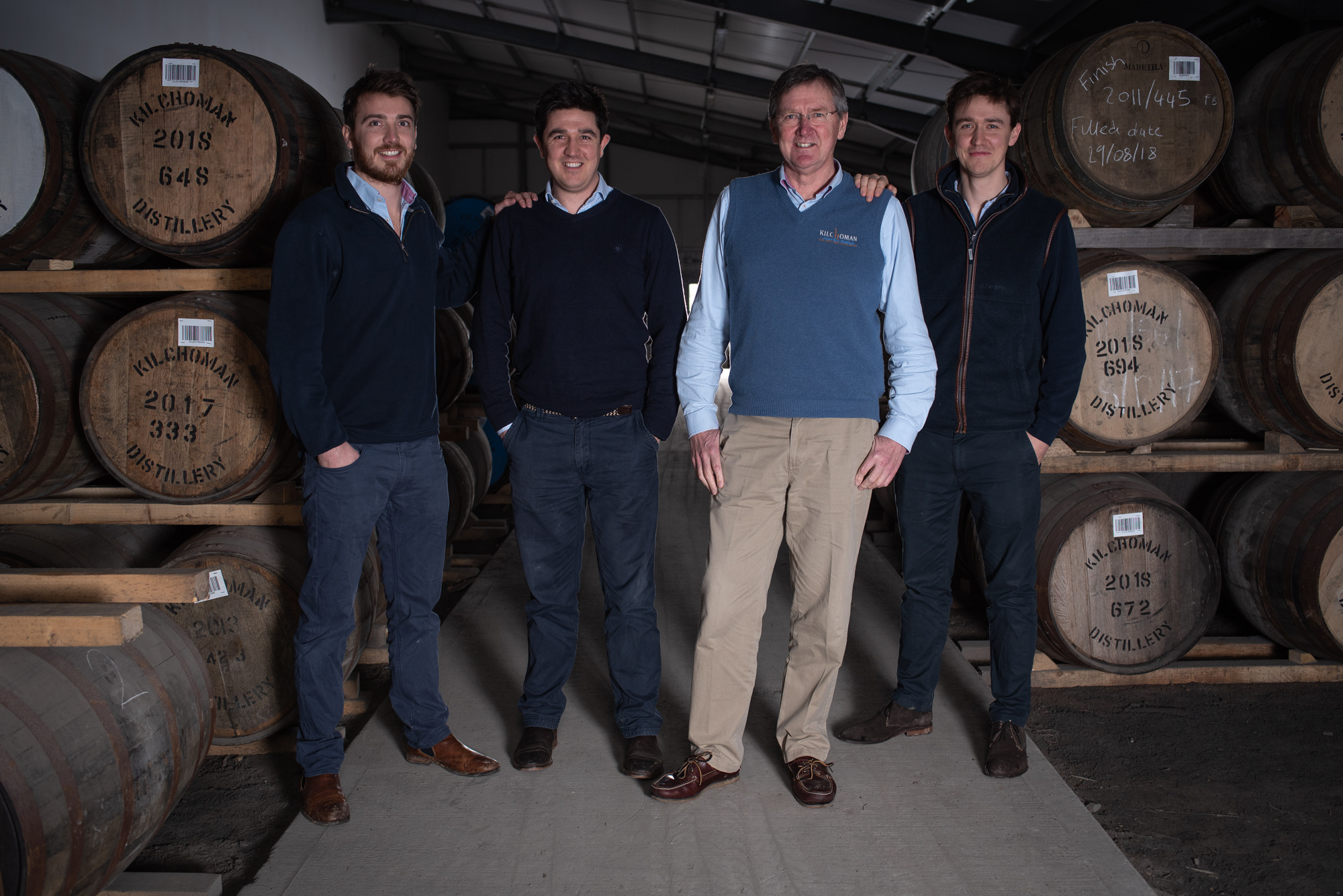
Here’s my take on our core expressions, each typically consumed in a weighty tumbler with a drop of water. This is my first ‘blog post’ and I was never much of an academic so bear with me…
Machir Bay
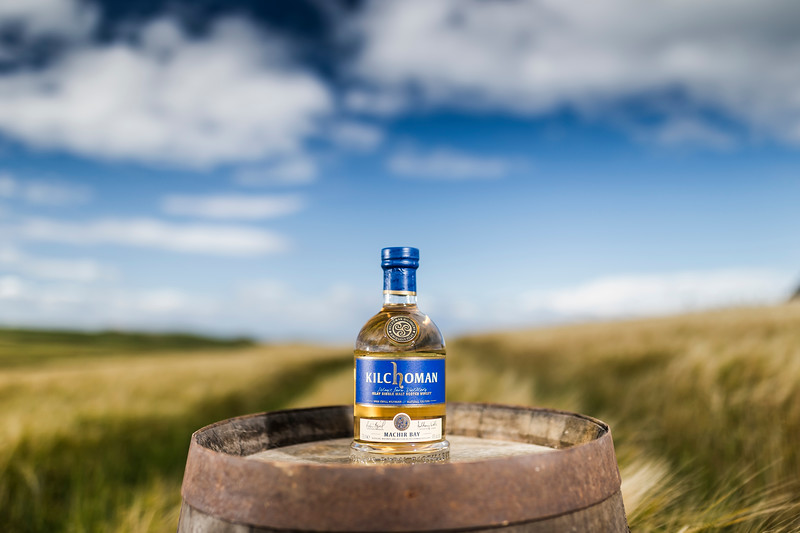
The mainstay of the Kilchoman range. In my view Machir Bay is everything that a bold Islay whisky should be, smoky and intense, it gives you a little punch in the gullet whenever you take a sip just to remind you that you’re not swilling any old dram. The balance of casks, mostly ex-bourbon barrels, allows the Kilchoman spirit to shine through, the earthiness and maritime character marrying with citrus sweetness and tropical fruit then layers of caramel, vanilla and butterscotch. For all sorts of reasons, Machir Bay is the Kilchoman expression I’m drinking 9 times out of 10. It embodies Kilchoman, Islay and the uniqueness of our whisky.
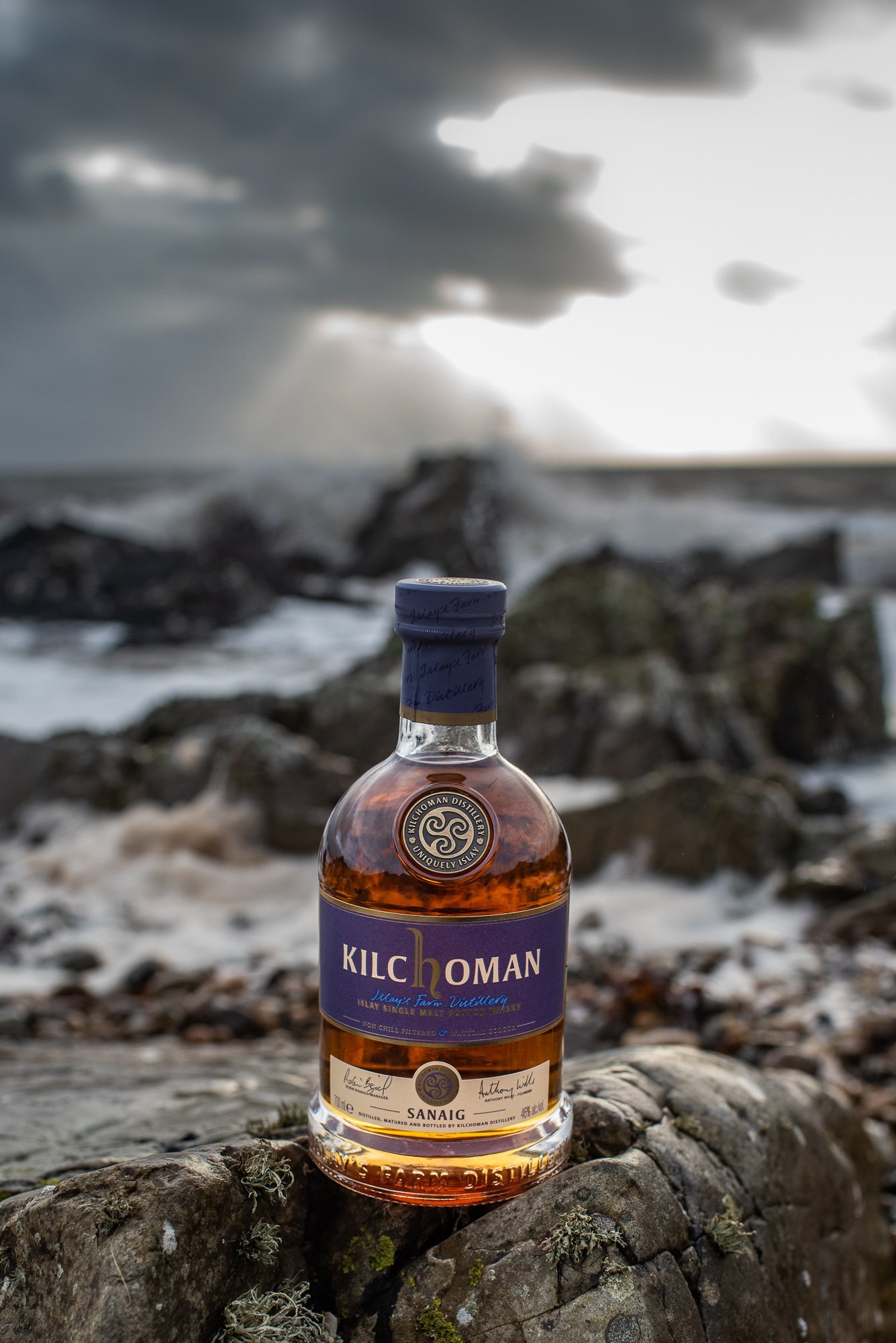
Sanaig
If Machir Bay were a weathered Islay hill farmer, Sanaig would be a tweed coated country gent. It’s high proportion of sherry cask maturation creates a darker colour and richer full-bodied flavour, Sanaig remains routed in Islay character but has a softer, more rounded feel. The citrus flavours of Machir Bay have been overlaid with notes plums, stewed sultanas and honey. There are hints of cinnamon and dark chocolate and the peat smoke develops in waves as the intensity builds and recedes. When the situation demands a refined dram, Sanaig is my go-to Kilchoman. Normally after dinner with a short speech to those in attendance… even if no-one’s listening.
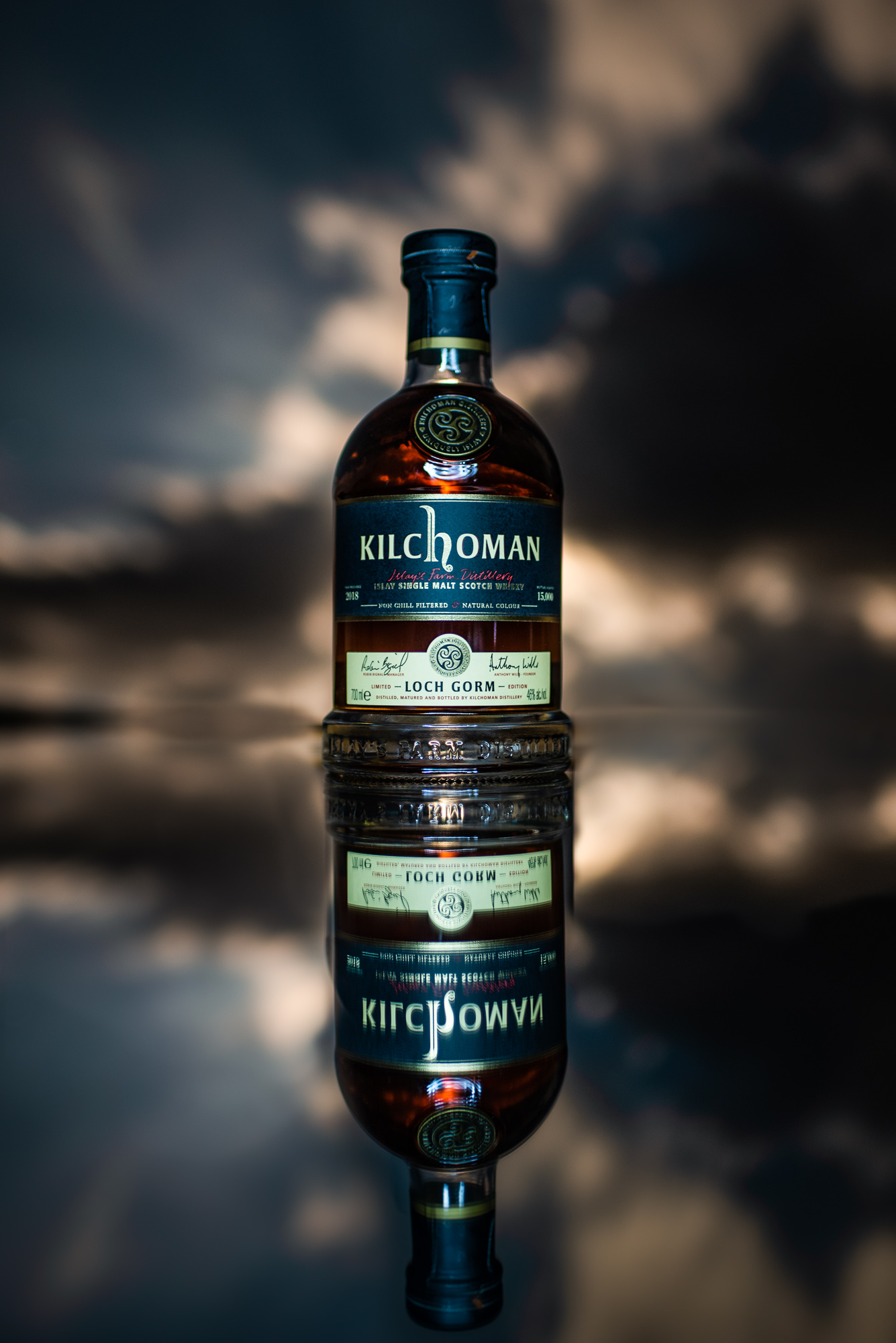
Loch Gorm
The early Loch Gorm releases were big rich brutes; young and confident with explosive palates of dried fruit and intense peat smoke. Latterly, particularly this year’s expression, 10 and 11 year old casks have counterbalanced the innate boldness with light fruitiness, cherries, blackberries and citrus to create a more mature and balanced older brother compared to the young runaways of 2013/14. The six editions of Loch Gorm dating back to 2013 are akin to siblings (me and my brothers perhaps), there are many similarities, but each have their own individual quirks. I’m usually quite greedy with my Loch Gorm, Peter, my younger brother, might drink a bottle in one sitting, George (older brother) would prefer to gaze at a pristine untouched bottle perched on the top shelf… my approach is probably somewhere in the middle.
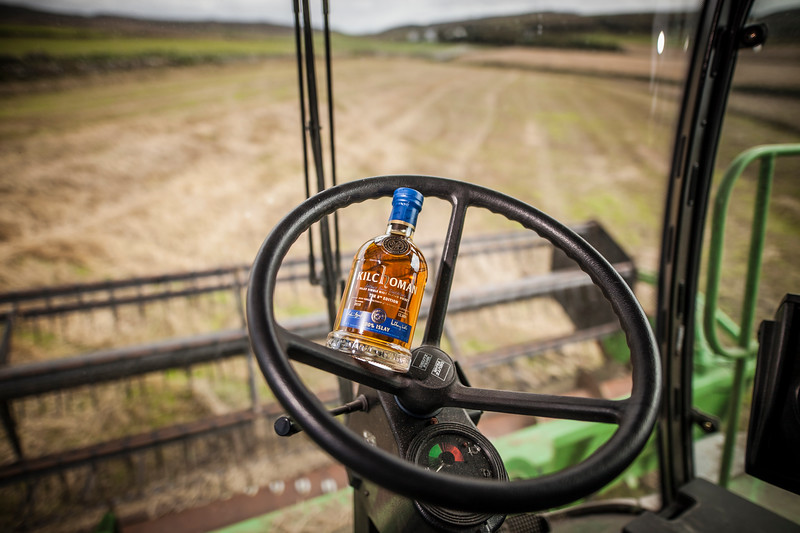
100% Islay
Prior to this year’s release (the 8th Edition) the 100% Islays have all been exclusively bourbon barrel matured, they’ve always had a beautiful elegance to them, almost perfumed, with loads of butterscotch, floral sweetness and a distinct freshness. This year we changed things up a bit by adding a good portion of sherry casks to the vatting, this has added a depth and fruitiness to the whisky without overpowering the elegance that characterises it. The 100% Islays are top of my list if I’m looking to impress, my trump card in the whisky stakes. No matter what edition I am sipping on, it always conjures up memories of shovelling barley on the malt floor during school holidays, not quite understanding what I was doing!
No matter the situation, mood or company I always manage to get my hands on a Kilchoman that fits the bill. You can explore our range for yourself here and I’d recommend dropping by your local whisky bar or shop and trying them for yourself.
Improving your whisky nose takes time and practice, but it’s worth it. Knowing how to nose a whisky better will help take the experience to another level, allowing you to shine a spotlight on the many layers that form its complex character. Once identified with the nose, it becomes easier to pick out the individual flavours of the whisky with your mouth; be it a rich caramel, delicate floral notes or the smooth vanilla holding it all together. Follow these six simple rules and your whisky nose will have considerably improved.
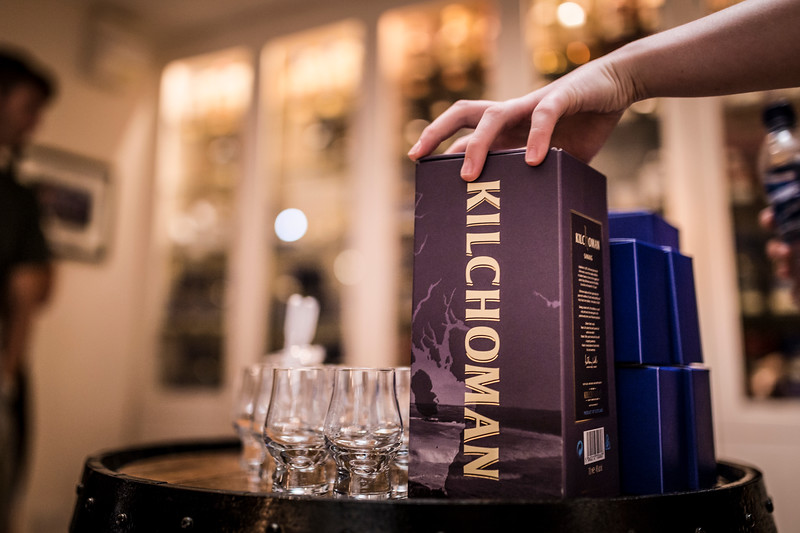
Rule 1: Forget all you know
The key to nosing (and subsequently tasting) a dram of kilchoman lies in the ability to forget, to become a blank slate. This is because humans are, on the whole, rather easily influenced. For example, tell someone not to think about a phrase like ‘glorious Scottish ginger hair’ and the chances are they’ll think of nothing else. Likewise, reading a label or studying some tasting notes that describe a whisky as “sweet with notes of lemon” may inadvertently make it difficult to find anything but these flavours.
Discovering the aromas of a whisky without any direction is not only more fulfilling, but it also helps hone your whisky nose far better. Since everyone’s palate is different, different flavours may initially stand out more – it’s all part of the rewarding learning process. If you identify an aroma or flavour, take time to elaborate on it. Is that lemon ripe, fresh, canned, candied or caramelised? The more specific you can be the better your taste buds will become at defining the flavours in the future. Before you know it, you’ll be penning elaborate tasting notes of your own, ruminating on new and exciting discoveries in the nose of your favourite expressions.
Rule 2: Forget time
There’s no rush when it comes to nosing a scotch whisky. Anyone who says different is either a liar or very late for a wedding anniversary. It’s unlikely that the first attempt will yield more than a few notes, often just an overriding indication of what’s to come. Waiting a few moments then trying again will help begin to unravel the enigma of a good scotch whisky. On the third pass try comparing the aromas to that of the previous try and notice how new secrets come to the fore. A dram of Kilchoman can be more complex than others, holding on to their intricate flavours for longer. Think of it as a reward for the most dedicated and appreciative drinkers.
Rule 3: Forget anatomy
A misconception many people have is that things smell the same regardless of the nostril being used. But in actual fact, due to the way your brain is wired, closing one nostril while breathing in through the other results in a completely different experience. Try this approach when nosing a scotch whisky to truly appreciate the breadth of the notes within. You can think of it like wearing those old-school 3D glasses: only by closing each eye separately can you see the individual red and blue layers that form the full picture.
On a similar theme, the mouth is more than just a yawning chasm for food and drink. While tasting, a true connoisseur will take time to notice how the whisky interacts with every component. From the tingle on the gums to the way it differentiates itself on the back of the tongue. It’s not simply an exercise in pouring and swallowing; it’s about taking the whisky into yourself, from nose, to lips, to tongue, to chest, and eventually to heart and mind.
Rule 4: Forget friendship
If you’re lucky enough to have a friend that drinks scotch whisky, why not steal some of theirs and take a break from the whisky you’re trying to nose? Think of it as a relaxing change of scene. Compare the two whiskies – taking time to consider the differences and similarities. Using two polar opposite whiskies, such as a light delicate 100% Islay and a dark and strong Loch Gorm can be a good starting point. It helps you pin down the qualities that unite and separate the nose of each whisky.
Over time, bring the two styles of whisky closer together. With a little practice you’ll soon sit agape at the thought that two whiskies you once considered so similar could in fact be so different. Another good approach is to use a whisky you’re already familiar as a benchmark of sorts: “is the other style more or less honeyed?” is a question you might ask yourself, out loud or internally – it doesn’t make a difference. Challenge yourself to discern what exactly makes the aroma of a whisky unique, what makes the nosing experience so enjoyable.
Rule 5: Forget old feuds
Life is too short for enemies. Go find your whisky friend and use your buddy as a sounding board – share a few drams and compare the notes and aromas you each notice in the glass. Perhaps they will be in total agreement with you, perhaps they will take the opposite stance. More likely though, they’ll be able to identify characteristics that you’ve overlooked or have been unable to identify with your own nose. You’ll also be able to do likewise for them – let’s not forget that friendship’s a two-way street!
Rule 6: Remember to enjoy yourself
Amongst everything, it can be easy to forget that a good scotch whisky is all about enjoying the moment. Don’t worry if you can’t pick out the notes of ‘crispy biscuit’ or ‘enamel paint’. Every set of tastes is subjective and there is no right or wrong to this process. Practicing every day – whether it be picking apart the scents of a warm summer breeze or treating your nostrils to a glistening dram of Sanaig– is sure to improve your whisky nose over time. It could take a while to become a master but, as they say, life is about the journey – a journey best lived in the slow lane.
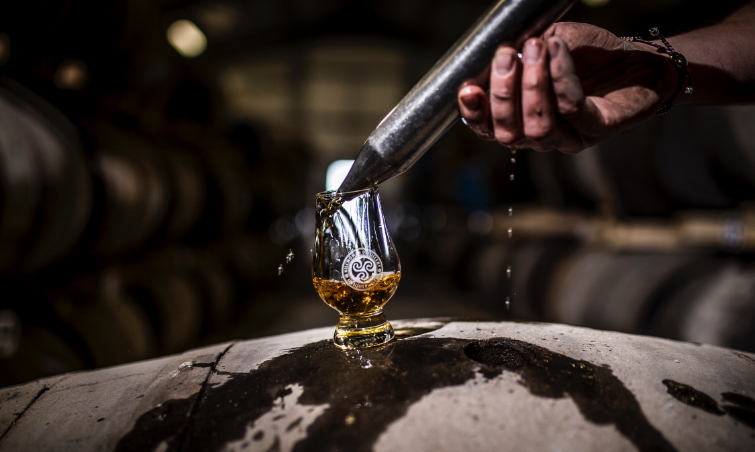
Yeast is one of the three raw materials permitted to make Scotch Whisky but for some reason doesn’t get spoken about as much as barley or water.
What is fermentation?
Fermentation in whisky-making is the process of adding distiller’s yeast to the wort, the sugary liquid collected from the mashing stage, to trigger the fermentation process which will over time convert sugar to alcohol.
There are two phases to the fermentation; the lag phase and the budding phase. Once the yeast is added to the worts it will take time to adapt to its new surroundings, this time is known as the lag phase and normally lasts for less than 12 hours.
Once the lag phase is complete the yeast begins to ‘bud’, a process of asexual reproduction. As the yeast reproduces it creates alcohol and amino acids, the starting point for the production of esters and congeners (these are the flavour compounds). While the process of fermentation isn’t necessarily glamorous or exciting to see, it is vitally important to the overall flavour profile.
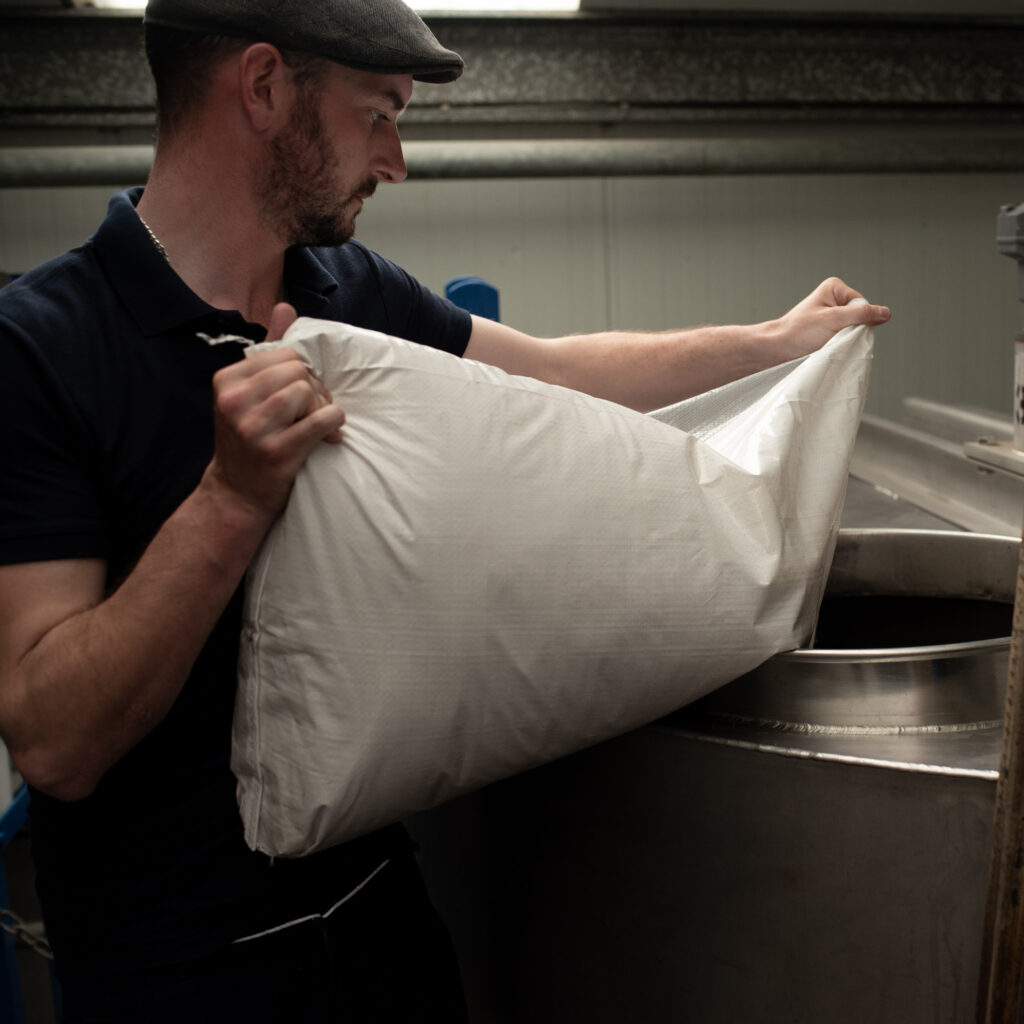
Why does fermentation time matter?
We typically categorise fermentation times into 3-time brackets; short (less than 60 hours), medium (60 -75 hours) and long (more than 75 hours).
Typically a short or medium fermentation time will produce a malty flavoured spirit. If the wash is allowed to ferment on beyond 75 hours, as we do at Kilchoman, the amino acids build within the liquid, adding layers of floral, perfumed sweetness and fragrant citrus notes. Our 85 hour fermentation time allows the yeast to fully ferment, creating a distinctly floral spirit balancing peat smoke and maritime influence with lighter citrus character.
Do all distillers use the same yeast strain?
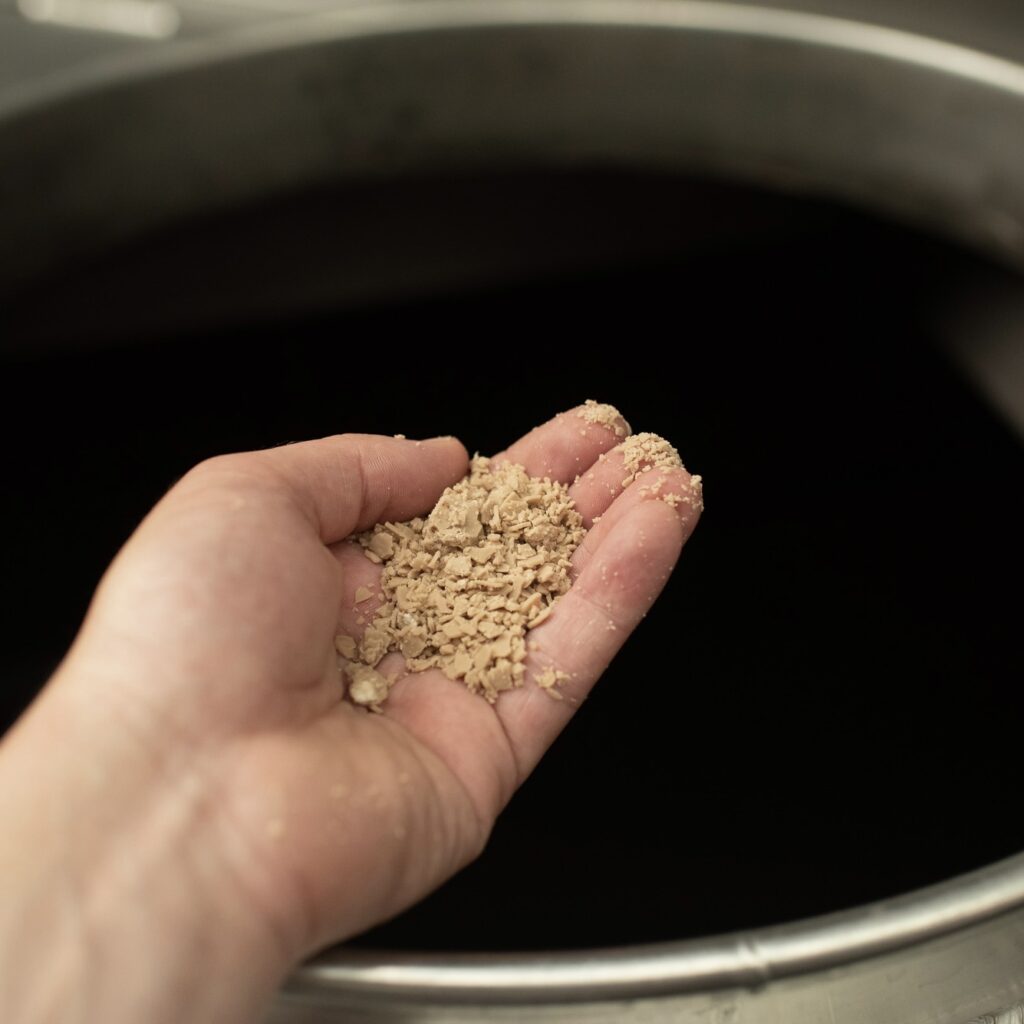
Yeast comes in three different forms, either as a liquid cream, pressed semi-dry or dried.
Liquid yeast is hard to maintain and only lives for a few weeks, but is most commonly used. Distillers will often keep dried yeast in stock just in case, as it lasts for several years.
There was a time when all distillers of scotch whisky all used the same yeast strain which was DCL M-Strain , this was due to its ability to break down maltose sugars and produce good alcohol but also flavours that were associated to Scotch Whisky. This strain is still used today by distillers, however modern strains such as MX, Mauri and Anchor/Bfp are now also available.
We ferment exclusively with Mauri yeast, a bagged live yeast which was chosen from four test strains. We found the Mauri yeast created the best balance of flavours, adding layers of citrus sweetness and tropical fruit.
Wooden or stainless steel washbacks?
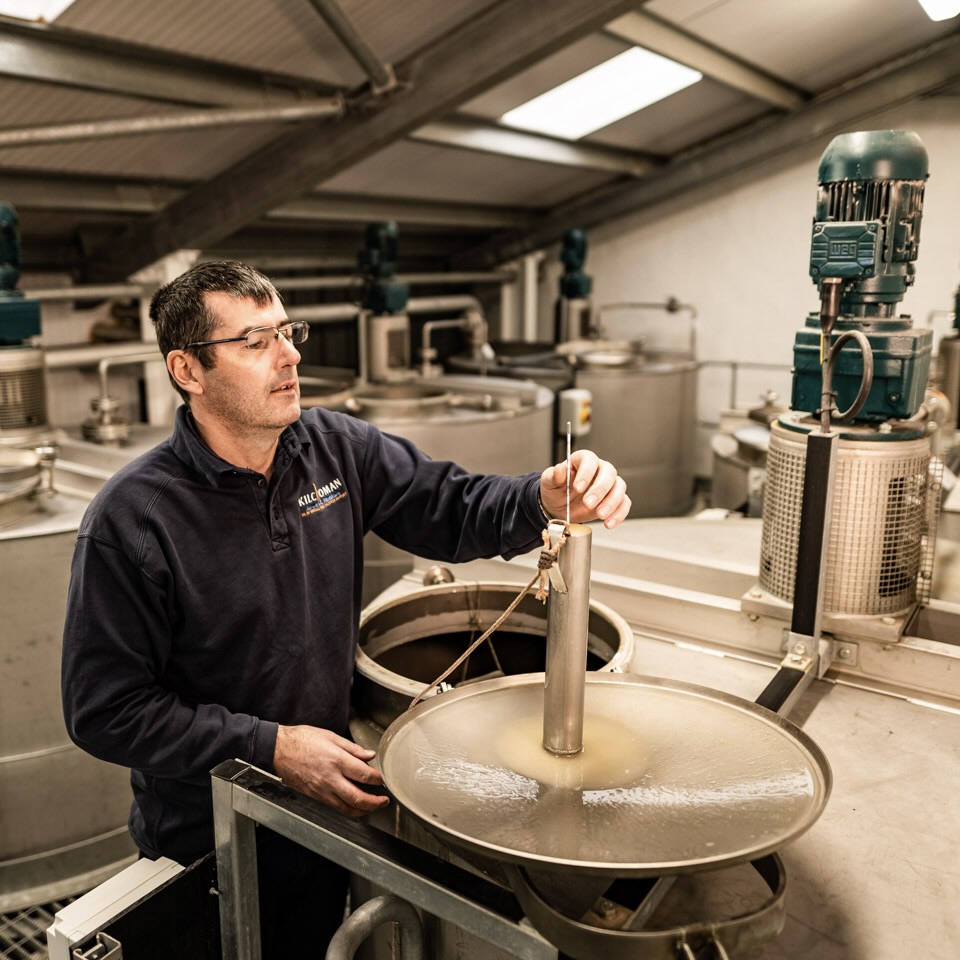
As well as the Yeast that is used in the fermentation process the materials of the Wash Backs are also up for debate. Originally all washbacks were made from European Larch, Douglas Fir or Oregon Pine. These were all used due to their long knot free planks. Recently distillers have been using stainless steel washbacks as they require far less maintenance and are a lot quicker and easier to clean. However, the debate as to which is better rages on with advocates of wooden washbacks saying that the wood helps provide a slightly sweeter wash.
Whilst wooden washbacks are beautiful to look at, each is different and can react in varying ways over their lifetime. Here at Kilchoman we have fourteen 6000 litre Stainless Steel washbacks. The choice of stainless steel ensures total consistency across all batches no matter the time of year or number of times they’ve been used.
So there you have it, our Fundamentals of Fermentation. Keep an eye out for more in-depth posts coming soon.
Click here to be first to hear about new releases and to have access to the exclusive Kilchoman Club Release!
Take a drive around Islay and virtually every signpost points the way to an iconic distillery… or village, depending on how you want to read it. Islay’s eight distilleries mean it holds a special status on the map of scotch producers however wind the clock back 200 years and almost every settlement on the Island was home to at least one distillery with over twenty registered distilleries and numerous other semi-legal distillers.
Despite the passing of the Excise Act in 1644 none of his majesty’s excisemen were stationed on Islay until 1797, allowing small scale distilling to continue for many years after our mainland cousins, who were being fined or imprisoned for similar practises. The Gaugers (excisemen) reluctance apparently due to the “wild and barbarous people”.
When the excisemen did eventually arrive on Islay the transition from unrestricted distilling to payment of registration and duty under the Excise Act was not easy for the people of Islay. In 1801 a total of 233 people were accused of distilling privately, forcing many of Islay’s ‘hobbyist distillers’ to go down official channels, registering as distillers to avoid heavy fines and possible imprisonment.
Between 1814 and 1836 fourteen Islay distillers transitioned from the caves and glens to ply their trade as fully paid up distilleries. Whilst a handful of these small-scale distillers survived, some merged to become what we now know as Lagavulin and Laphroaig distilleries, many didn’t. Below is a brief history of Islay’s many Lost Distilleries.
Malt Mill Distillery, Established 1908
When Sir Peter Mackie lost his bitter legal dispute to retain the sales agency for Laphroaig whisky in 1907 he reacted in characteristic style by deciding to make his own “Laphroaig” type whisky, and in 1908 built a traditional small pot-still distillery within the Lagavulin complex. Despite hiring staff from Laphroaig and attempting to copy the Laphroaig recipe, it did not succeed, perhaps because it used a different water source. Malt Mill tried to replicate a traditional style of Islay Whisky, using only peat-dried malt, and it is reputed to have had heather added to the mash. It was always a small scale operation producing 25,000 gallons of proof spirit (113,500 litres) in its first year, compared with 128,000 gallons (581,120 litres) at Lagavulin. What is perhaps surprising is that it survived until 1962 when it was merged with Lagavulin and its coal-fired stills moved to the latter’s still house for another seven years use. The Malt Mill distillery building is now the reception centre within the Lagavulin Distillery site.
Mulindry Distillery, Established 1826
This is perhaps one of the shortest lived and unlikely distilleries on Islay. Built by John Sinclair in 1826 it operated at a site beside the junction of the Neriby Burn and the River Laggan, next to McNeill Weir (the start of the Bowmore Distillery lane) and its machinery was water-powered from the nearby river. Its output in 1826-7 was 4,332 gallons (19,667 litres) of malt whisky. Sinclair, according to the Local Excise Officer in 1831, liked his own product a little too much which may account for his bankruptcy that year and emigration to America. The distillery appears never to have reopened and today all that is left is a pile of overgrown stones and derelict croft.
Newton Distillery, Established 1819
The Small Stills Act of 1816 encouraged quite a few individuals to take out distilling licences and in 1819 Thomas Pattison opened a farm distillery at Newton, located on the Bridgend to Ballygrant road. Newton produced 6,122 gallons (27,793 litres) of spirit in 1826-7. It operated continuously until 1837, by which time most farm-scale distilling operations had closed down on Islay. Little is known about the operation of the distillery although there is still and outbuilding at Newton House that could have been part of the distillery and the metal bars on the window are perhaps signs of previous use as a bond.
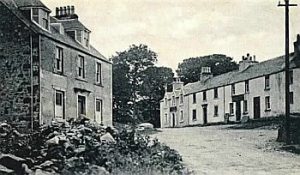
Octomore Distillery, Established 1816
This farm-scale distillery on an ancient site behind Port Charlotte was run from 1816 until 1840 by the Montgomery family and licenced to George Montgomery. It appears to have operated as a single-still distillery with a wash still of 60 gallons volume (272 litres) with 998 gallons (4,530 litres) of spirit produced in 1817-18, this rose to 3,551 gallons (16,121 litres) in 1826-7. Little is known about its operation until the death of George and his brother around 1840, when it fell into disrepair and the lease was eventually relinquished to the laird, James Morrison in 1854 for £150. Buildings in the farm steading remain today, although some have fallen down and others have recently been converted into holiday cottages, so guests could well be sleeping with the spirits of 160 years ago! No detailed plans of the distillery buildings have yet come to life.
Port Ellen Distillery, Established 1825
Established in 1825 by the McKay family. It was operated by John Morrison & Co from 1831-34. John Ramsay and later his wife ran the distillery from 1836 until 1920, during which time they expanded the distillery. It was eventually acquired by DCL who mothballed it from 1929-67. Production buildings were then re-built by DCL and the distillery operated from 1967-83 when it was closed again during the whisky rationalisation of the 1980’s. As DCL already had two other distilleries (Caol Ila and Lagavulin) Port Ellen was tragically thought to be surplus to requirements. The original distillery buildings remain, linked to the Port Ellen Maltings complex. We are told that Port Ellen may be reopened once more and given a new lease of life…
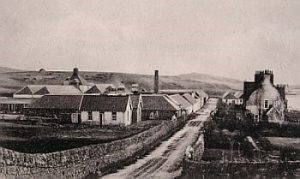
Scarrabus Distillery, Established 1817
One of the most obscure and short-lived farm distilleries on Islay. A licence was taken out in the name of John Darroch & Co for the year 1817-18. It seems likely that this was an opportunist attempt at distilling following the 1816 Small Stills Act as records reveal a 76-gallon (345 litres) single still operation in 1817-18. Scarrabus Farm exists (off the Ballygrant road), although whether this was the exact location of the distillery and what happened to it after its two short years remains to be discovered.
Tallant Distillery, Established 1821
This distillery was established in 1821 by the brothers Donald and John Johnston at Tallant Farm, near Bowmore. Excise records until 1827 show this distillery recorded as one of two ‘Bowmore’ distilleries. It appears to have been a true farm-scale operation with Angus Johnston listed at one point as distillery manager. It was never, however, a profitable commercial operation, perhaps in part due to generous drams John provided to visiting workmen and farmers. Output was as low as 220 gallons (998 litres) a week and reached 2,101 gallons (9,538 litres) in the year 1826-27. The business folded in 1852, although John’s brother Donald and his son, Alexander, were to become successful distillers figuring prominently with Laphroaig’s development. Tallant Farm exists today and many buildings from those distilling days remain, albeit some in a state of collapse.
Ardenistiel Distillery, Established 1836
After the successful establishment of Laphroaig distillery in 1816, a farm tack was leased by Walter Frederick Campbell to James and Andrew Gardiner, financiers for the Ardenistiel Distillery, who then put it in the capable hands of James and Andrew Stein of the noted Clackmannan distilling family. They ran it until 1847, operating on site immediately adjacent to the Laphroaig Distillery. Ardenistiel was then assigned to John Morrison, a previously unsuccessful manager of Port Ellen Distillery. He was unable to make a go of it and only remained until he was sequestrated in 1852. The distiller then passed to John Cassels, of whom little is known and whose tenure at Ardenistiel appears to have lasted for less than a year. It then came into the hands of William Hunter who struggled to make the distillery pay, operating at half capacity producing 33,000 gallons (149,820 litres) a year. By February 1866, William Hunter was made bankrupt and by 1868 the distillery was reported dilapidated. It was eventually thrown in with Laphroaig Distillery and its derelict buildings eventually became the site of Laphroaig’s warehouses and offices today.
Ardmore Distillery / Lagavulin 2, Established 1817
Little is known of the Ardmore Distillery which shared the sheltered bay at Lagavulin with the Lagavulin Distillery. It was established in 1817 by Archibald Campbell, although when the name Ardmore was adopted is uncertain. It opened as a 92-gallon, single wash distillery, but within a year was operating under double distillation with the addition of a 30-gallon low wines still. By 1825 it was being operated by John Johnston of Lagavulin who ran both distilleries simultaneously often using the names Lagavulin 1 and Lagavulin 2. Johnston died in 1836 and in 1837 a valuation carried out shows the two distilleries as having operated during John Johnston’s tenancy. The Still House (No 2), Tun Room and Malt Barn No 4 were all listed as belongings to the Laird Walter Frederick Campbell, as Ardmore Distillery. Alexander Graham, a Glasgow distiller-merchant and owner of Islay Cellar that supplied Islay Malts in Glasgow and to whom Johnston was indebted, acquired the distillery for the sum of a little more than £1100. Lagavulin and Ardmore were immediately merged and together form the site of much of the present-day Lagavulin site.
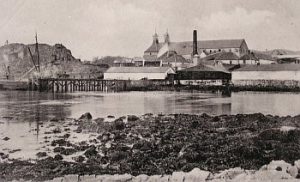
Bridgend Distillery & Killarow Distillery, Established unknown
Details of these two (or three) distilleries located at the former island capital, Bridgend, are very limited. David Simson is on record as operating a licenced distillery at Killarow until 1766 when he moved to Bowmore to establish the distillery that survives today. Its exact location is unknown. A Bridgend Distillery was custom-built by Donald McEachern Senior in 1818 with a wash still of 146 gallons producing single distillation whisky. It was then run by his son Donald Junior between 1818-21, when the company was wound up and ceased operations. Information exists that suggests a distillery was licenced to a J MacFarlane at Bridgend around 1821 with an annual output of 3,937 gallons (perhaps a new owner for the McEachern’s distillery?).
Daill Distillery, Established 1814
Daill distillery probably operated as a farm distillery after the Small Stills Act encouraged distillers to go legitimate. The distilling operation was, throughout its short life, in the hands of the McEachern family with the licence being held successively by Neil McEachern from 1815-25, Malcolm McEachern from 1825-26 and Donald McEachern between 1826-34. By 1827 it had annual output of 6,043 gallons of proof spirit. Its demise, like that of many inland distilleries on Islay, was probably sealed by the difficulties of transporting the product to the mainland markets. Buildings in remarkably good condition at Daill farm exist, and these could well have been the location of the McEachern family distilling operation.
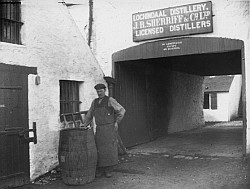
Lochindaal distillery aka Port Charlotte and Rhinns, Established 1829
Lochindaal was a purpose-built distillery in the Rhinns of Islay which survived in the 20th century. Located in the heart of Port Charlotte village it was constructed for its first licencee, Colin Campbell, in 1829. He only held onto it for two years and subsequently it had many owners: McLennan & Grant from 1831-2; George McLennan 1833-5; Walter Graham 1837; Henderson Lamont & Co until 1852; Rhinns Distillery Co 1852; William Guild & Co to 1855 before a period of stability under the ownership of John B Sherrif until 1895 and then J B Sherrif & Co Ltd up to 1921. It was eventually taken over by Benmore Distilleries Ltd in 1921 prior to that company’s acquisition by DCL. That signalled the end of Lochindaal and it closed in 1929. Some of it was used by the Islay Creamery until the early 1990’s and the shore-side warehouses remain in use by a local garage and the Islay Youth Hostel and Field Centre, whilst a roadside building is now used for vehicle repairs and the distillery cottage is inhabited. The bonded warehouses on the hill behind the distillery site have been in continuous use by other distillers and are currently used by the Bruichladdich Distillery. This is one lost distillery on Islay that has a good photographic history, which clearly records the distillery site during its century of operation.
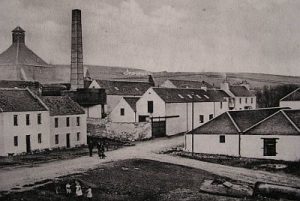
Lossit Distillery, Established 1826
Lossit Distillery was located at Lossit Kennels, not far from Ballygrant on the minor road to Lossit Farm, close to Loch Ballygrant. It was a medium-sized farm-scale operation and in 1826-7 it produced 12,200 gallons (54,480 litres) of proof spirit. It was operated by Malcolm McNeill from 1826 to 1834, by George Stewart until 1852 and a John Stuart thereafter for a further 10 years. This makes it one of the longest surviving 19th century farm-scale distilleries on Islay. There is a possibility that Bulloch, Lade & Co used the Lossit warehouses (perhaps to store Caol Ila whisky) until 1867. Today the house and kennels remain, although where whisky distilling actually took place remains a mystery and there is nothing left of the warehouses.
Other Islay locations thought to have operated as licenced distilleries include: Ballygrant (1818-21), Freeport (c 1847), Glenavullen (1827-32), Octovullin (1816-19), Upper Cragabus (c 1841) and Torrylin (no dates available)
Researched & written by whisky history enthusiast Graham Fraser.
Following visits to Islay from the late 1990s onwards, Graham discovered the existence of early licenced farm distilleries with no written history. Through site visits and public record research he was able to shed light on the individuals & their distilling stories from Islay’s past.
Thank you to Graham for sharing his findings with us.