The second week of the European Tour has come to a close after crossing Belgium, stopping at Heuvelland, Mechelen, Boormeerbeek, Heers and Liege before a quick stop in Wemperhardt over in Luxemburg. With 4 different languages spoken across these countries, it was great to see the multilingual love for Kilchoman as they enjoyed their drams and cocktails.

Maneuvering the trailer in the tiny streets of Belgium proved a challenge but expert driver James managed to get the trailer through to attend all the events no matter the squeeze.
Getting the Land Rover over the border to kick off the third week of the European Tour came with a little hiccup to say the least…Breaking down on the Netherlands “snelweg” (motorway) was not the ideal start! But not to worry Olivia and James made their flight and left the Land Rover all fixed-up and ready to be taken over by George and JJ to continue the tour into the Netherlands, thanks to the wonderful mechanics at the Land Rover Terlouw Garage. Phew!
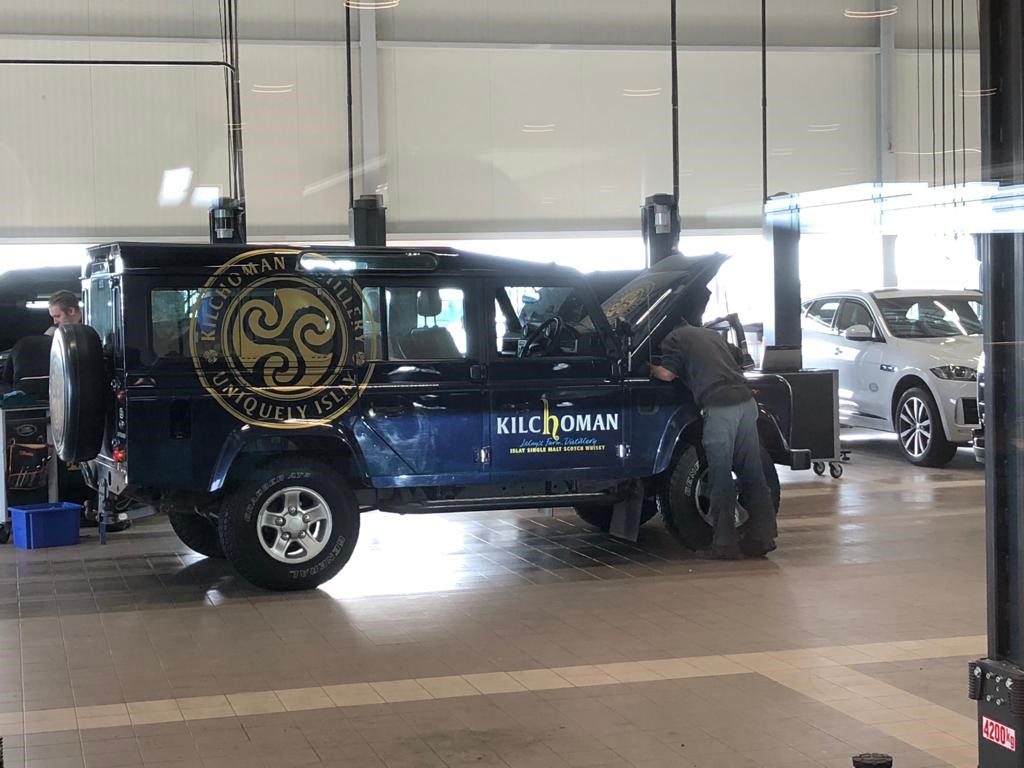
Of course, thank you to all the shops who hosted us and everybody who came down to see us in Belgium and Luxembourg. Now it’s time to say Hallo to the Netherlands and begin the third week of our European Tour!
All the stops through the European Tour can be viewed HERE and keep up to date with events on FACEBOOK and INSTAGRAM.

We were proud to be part of the WW100 Commemorations that took place at the Kilchoman Military Cemetery and here at the distillery on Saturday. As well as being part the nationwide WW100 commemorations which reflect on the 100 years since the end of the First World War, the service and reception focused particularly on the sinking of HMS Ontranto which was wrecked on Machir Bay just half a mile west of the distillery after colliding with another vessel in a storm during the First World War. Only 19 of the 500 servicemen onboard survived despite the heroic efforts of local farmers, shepherds.

To pay tribute to the tragedy and to celebrate the community of Islay and the spirit of friendship shown by its people during World War 1, Anthony, Kilchoman’s founder, selected a single cask to be bottled in the memory of those lost with all proceeds from the sale of the exclusive bottling gifted to the Islay WW100 Legacy Fund. A cheque for £15,950 was presented during a lunch held on the Malt Floor after a touching remembrance service at the Kilchoman Military Cemetery attended by locals and descendants of both survivors and rescuers. Around 200 delegates were thought to have attended filling our malting house to watch local artists perform over a bowl of warm soup and a dram.

As well as British serviceman, over 300 American troops were lost in the sinking of the Otranto so it was perhaps fitting that the single cask selected was matured in an American Bourbon barrel, a symbol of the enduring links between Islay and the US. The cask strength edition was bottled at 58%ABV and was limited to just 252 bottles. For more information on HMS Otranto and the WW100 Legacy Fund please visit: www.ww100scotland.com

Islay’s distilleries each have their own unique history, vibrant layers woven deep into the fabric of the Island. If you’re lucky enough to ever find yourself stood on the golden sand of Machir bay on a rare sunny day, you might even detect the warm scent of peat smoke rolling over the sand dunes from Kilchoman’s Kiln. Follow that scent and you’ll walk past golden fields of barley, right up to the gates of the distillery itself. Unlike other whisky distilleries on Islay, that grain is the one that ends up in the bottle – forming our 100% Islay single malt whisky. In fact, every step of its production, from barley to bottle, takes place on-site. It’s the way whisky was meant to be made, and if you’d be so kind as to join us on the Kilchoman distillery tour, we’ll show you just how.

The Meet
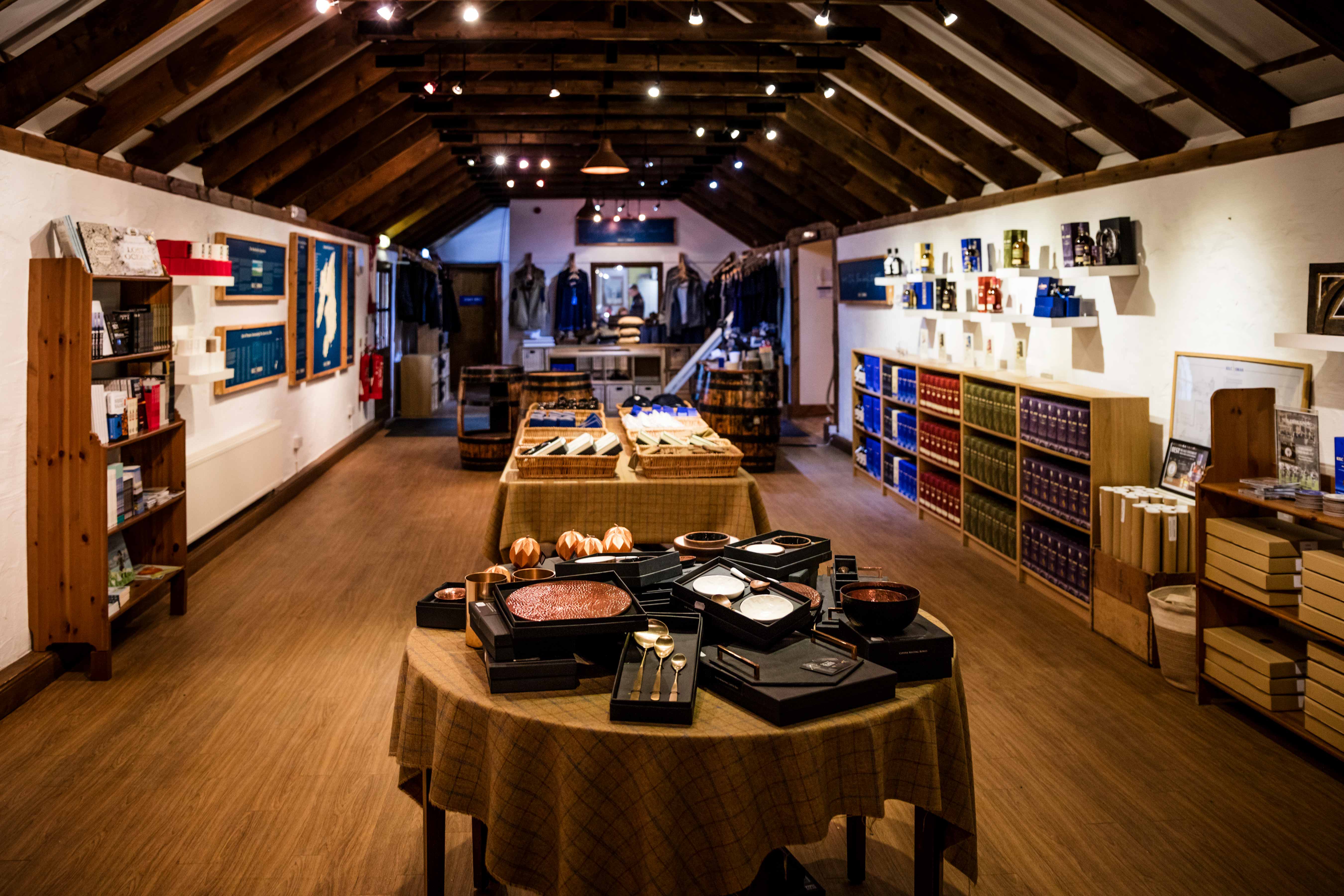
After arriving at Kilchoman, you’ll get a chance to meet fellow tour goers and have a look around our visitors centre. Adorned with traditional low beams and mementos of life on Islay, it’s the perfect space to mingle and absorb some of our history before the main event begins.
The tour starts with an induction by one of our tour guides. With encyclopedic knowledge of the distillery’s inner workings, they’ll guide you through the history of Kilchoman; from the ambitious vision of founder Anthony Wills to the bottles of whisky being produced today and hear what the future holds for Kilchoman. As the smallest distillery on the island there’s a family feel to affairs, questions are encouraged, and anyone is welcome to photograph throughout the tour. In fact, there’s a good chance you might bump into Anthony himself, or his wife Kathy, or any of their three sons checking the production – all of whom have been known to happily stop for a chat. Like we said, it’s a family affair.
The Malt
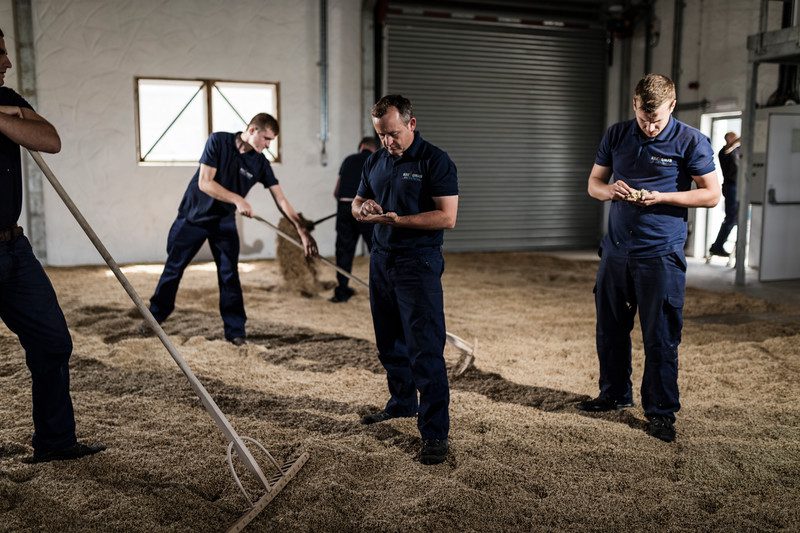
Stop one of the tour is the malting floor. Here four tons of barley are soaked for 48 hours before being spread evenly across the malt floor. This step begins the germination process, where natural enzymes begin to break down the starches in the grain. As the grains are turned and raked by the production team, the sweet nutty aroma of the sugars are released into the surrounding air. Visitors are welcome to pick-up and feel the barley for themselves, noticing how it runs between the fingers and varies from grain to grain. It’s hard to imagine that whisky could ever be produced from these tiny seeds but soon the picture starts to come together.
The Kiln
Islay is famous for its peat, with its distilleries using the natural sources for centuries to produce peated single malts renowned the world over. The kiln at Kilchoman is no different, sitting our barley three metres above a gentle smoldering peat fire for 8 hours allowing the rich smoke to pass through the barley, before we then start to dry the barley – stopping germination at just the right point. The smoke from this fire is one part of what gives Kilchoman its unique, complex taste, quite literally absorbing the flavours of Islay.
The Mill
While looking around you’ll be able to see that all the equipment has been custom-made to produce the exact flavours desired by our stillmen. Every piece but the Mill that is. Used to expose the sugars from within the tough outer husk of the barley grains, the Porteus mill we use has been running consistently for eighty years, predating the distillery and all of those that work within it.
Over the continuous rumble you’ll be told the bittersweet story behind the mill, the constantly beating heart of the distillery. You’ll also be able to see how the barley ends up as grist, a mix of husk, grit and fine flour. You can actually use the grist to produce traditional scottish cakes, but more about those later.
The Mash
Our Still House is also home to our Mash Tun you’ll be able to witness the process used to extract the sugars from the grist, 1.2 tones to be precise, is put in to our small but perfectly formed mash tun. Here the sugars dissolve into hot water creating a naturally sweet, nectar-like water known as ‘wort’. You will also be told why there are bent spoons over the sprinklers… Some people describe drinking wort like eating raw cake batter, some quite enjoy a sample but we prefer it as whisky. Of course, you can judge for yourself and you’re more than welcome to try some, comparing it to the wash created in the next step. Speaking of…
The Fermenting
As you enter our Tun Room you will see our 6 wash backs. These contain cooled down wort and just the right amount of yeast to break down the sugars within, producing the all important alcohol and carbon dioxide. This might sound familiar to some. We call it ‘wash’ but others will know it better as beer, a strong one admittedly (8%), that you can sample fresh from the production line.
Not only are Kilchoman wash backs smaller than the other distilleries on Islay, they also keep the wash inside for around a day longer than most other distilleries, 82 hours in total. This extra time is what gives Kilchoman its light, fruity and slightly dryer wash which once distilled produces our unique floral and sweet spirit.
The Distillation
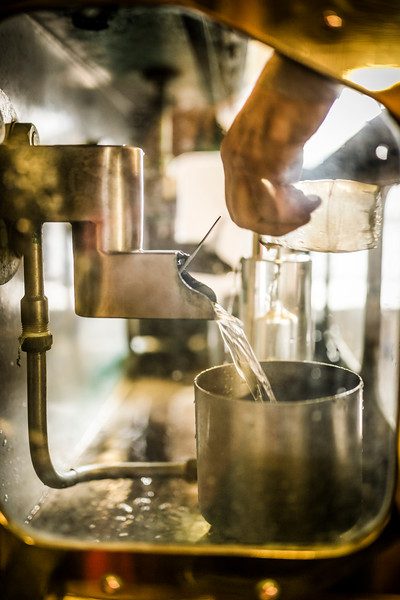
If the mill is the heart of distillery then the two pot stills we use are its hands, taking the wash and carefully moulding it into the pure Kilchoman spirit. You’ll be able to examine both the wash still, used to produce 1000 litres of 19% ‘low wines’, and the spirit still, which refines this further into 300 litres of pure spirit.
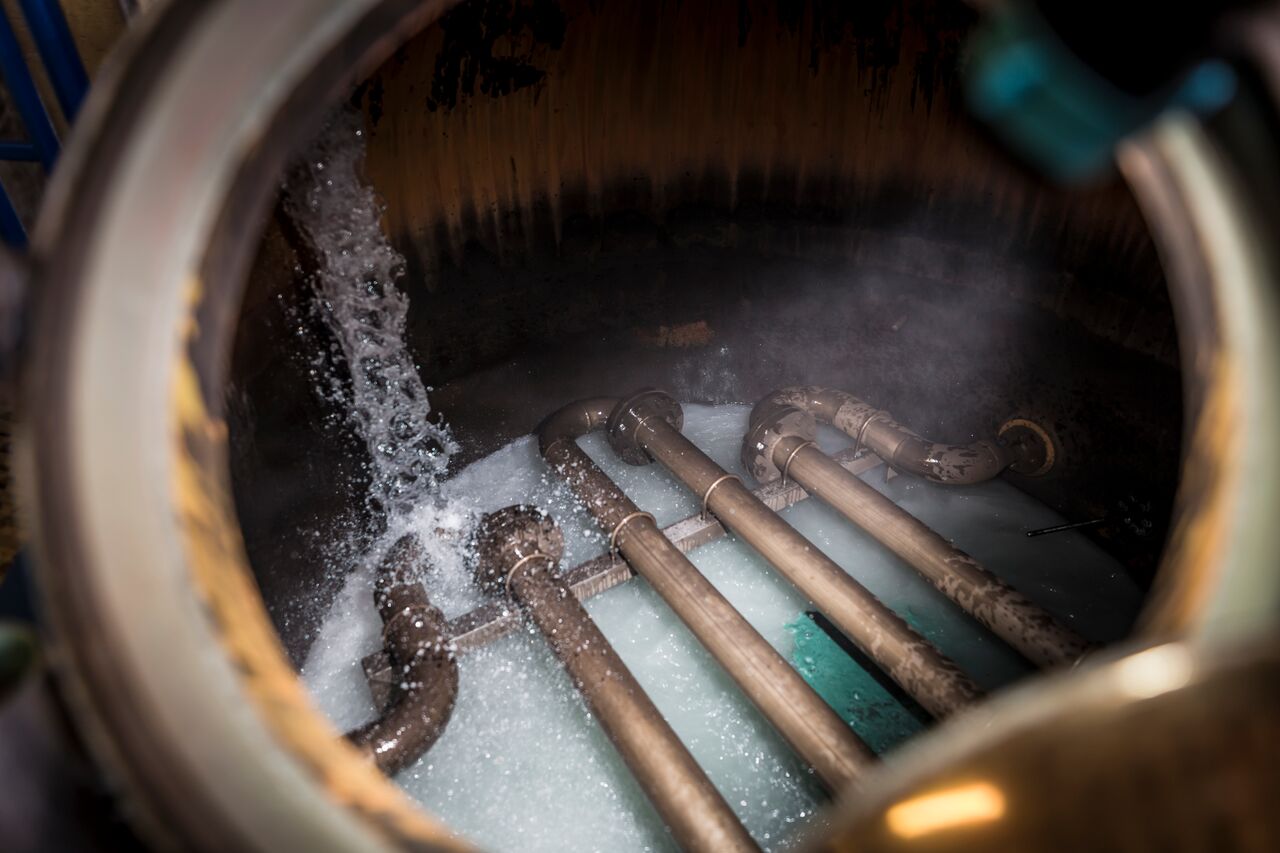
Each distillation lasts around three and a half hours, during which the production team makes sure only the ‘heart’ of the spirit ends up being sealed into our selected casks. The science of pot stills is incredibly intricate, and our spirit still has been hand-crafted to make the most of it. Our stills are the smallest on Islay and amongst the smallest throughout the whole of Scotland. This, alongside an elegant copper neck and reflux bulb, helps to achieve the distinct character Anthony Wills set out to achieve almost 13 years ago.
The Maturation
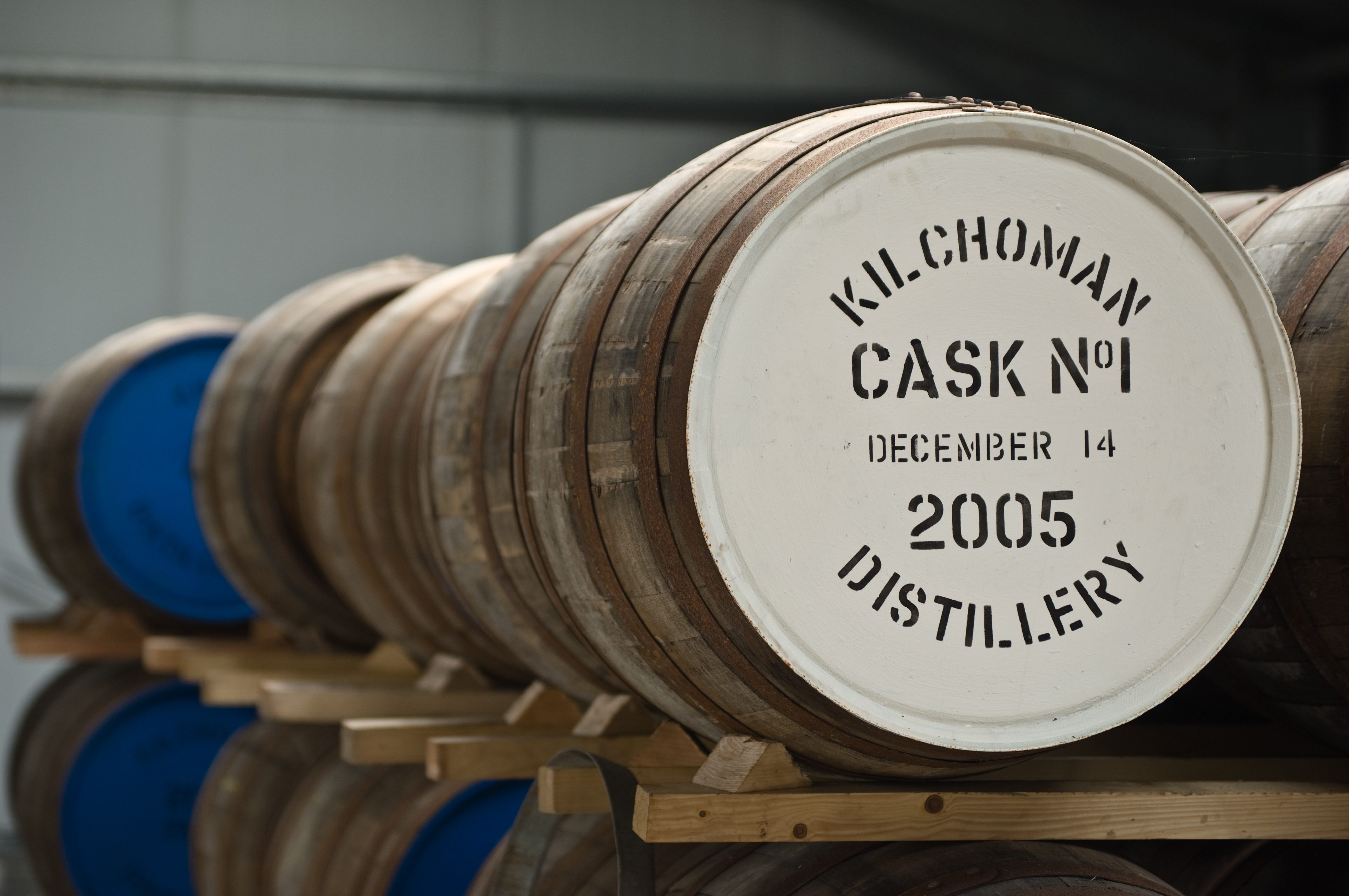
For the keen whisky enthusiast on the premium tour, you’ll be welcomed into the warehouse – where the spirit spends years interacting with the oak casks that give the whisky its depth of flavour. No cask is the same as the last and our expert team are on hand to share their secrets, as well as a dram or two.
The Bottling
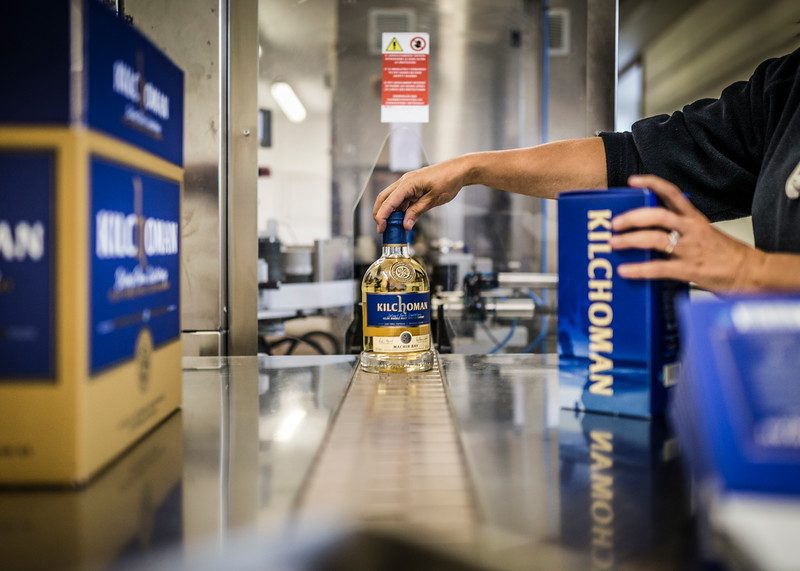
We are one of only two distilleries to bottle our whisky on Islay and at the distillery. In the Bottling Hall you’ll find our hard-working team, taking care to bottle and seal each bottle, before finally adding the kilchoman coin. Over recent years the bottling hall has been expanded to keep up with the increasing demand for our range of Single Malts. Although all our single cask releases are still hand labelled and numbered.
The Taste
What’s a whisky tour without a taste? During the tasting session you’ll be able to compare notes with other members and your guide, raising a dram unlike any other. For those unlucky enough to be designated drivers (or who just don’t fancy it) you also have the option of taking your samples home as a miniature, perfect for sampling later.
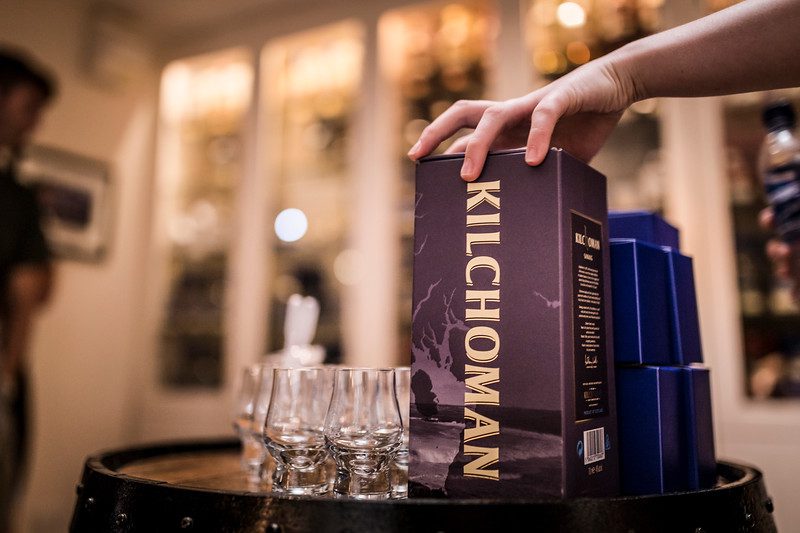
For those on the premium tour there’s a longer tasting session of five drams in total. Between each sample the palette is cleansed with a homemade grist biscuit (told you they’d return) and a discussion of the flavours that form each sample. Every member of every tour is also welcome to keep a branded Kilchoman tasting glass as a souvenir, lovingly boxed for safe transit – though why you’d want to leave is another matter.
The Finish
Smooth and with a warm afterglow, but enough about the whisky. After your tour has come to a close you’re welcome to come have a chat with anyone here at the distillery, learning about all that makes Islay so much more than the whisky we make. You can also have a look around the Kilchoman shop, everything from whiskies to traditional Scottish tweeds – designed by Kathy Wills. It’s a family affair and we’d love it if you joined.
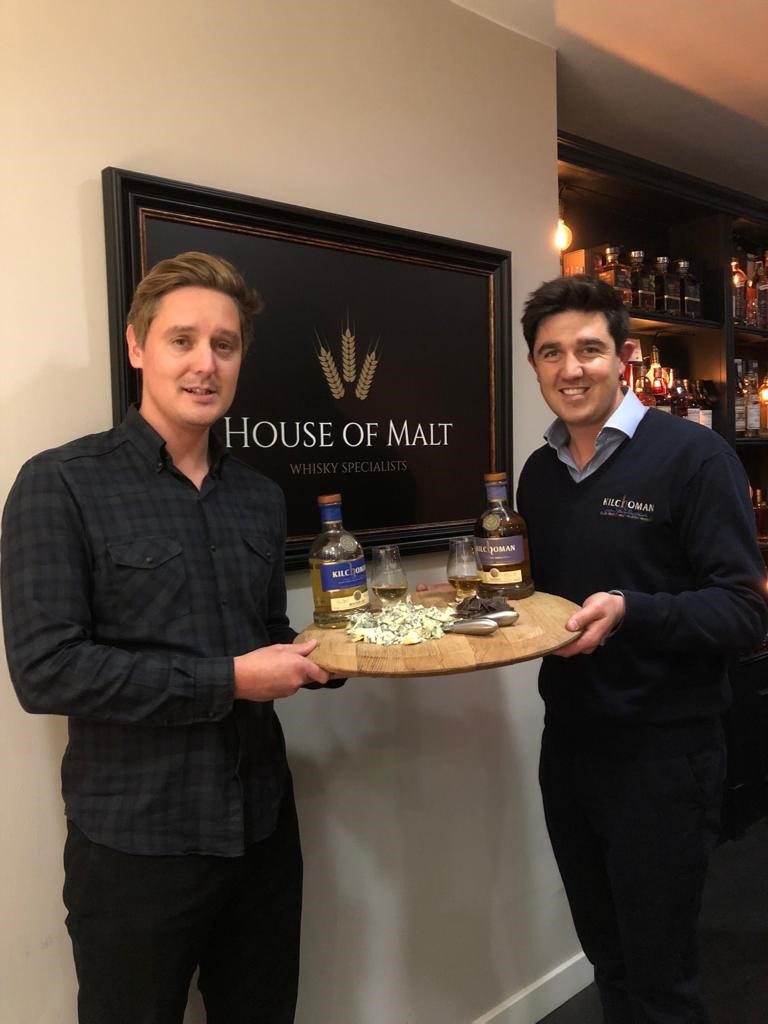
The European Tour kicked off last Monday 24th Sept in Glasgow! George flew the flag through the UK with events in Glasgow, Carlisle, Bath and London. It was great to see so many enjoying the Kilchoman entertainment; the cocktails went down fast, the Atlantic sea salt chocolate and highland cheese was gobbled up, and of course the various drams of Kilchoman were being savoured well into the evening.
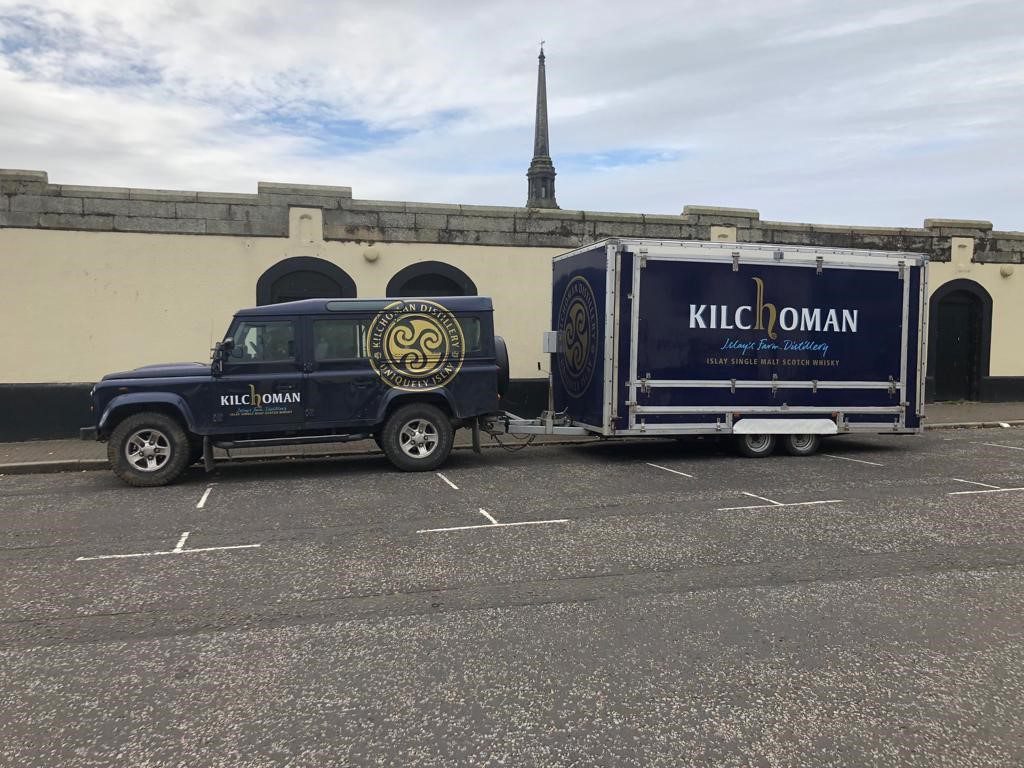
The trailer has made for interesting towing and it was always ambitious navigating it through central London, so in the end the Land Rover went solo on the trip to Milroy’s in Soho (but the goodies came with us!). As you can imagine, the tour bottling has been a popular dram at all the stops, not lasting long on the shelves, or in the glass!
Taking up a few spaces in the Carlisle car park
Thank you to all the shops / bars who hosted us and a special thank you to Ross from The Hideout in Bath for making a delicious Kilchoman cocktail for our evening, an alternative to the Machir Bay Old Fashioned we have for the other stops.
Now into Belgium and Luxembourg where Olivia and James are a few days into their week of events…
All the stops through the European Tour can be viewed HERE and keep up to date with events on FACEBOOK and INSTAGRAM.
Sauternes Cask Finish, a limited edition release of just 30 casks, is on its way around the world, hitting shelves any time from Monday 1st October.
The Sauternes Cask Finish follows a range of wine cask releases we’ve bottled over the previous five years. This latest offering differs in that it was initially matured in ex-bourbon barrels before being transferred into fresh Sauternes hogsheads for five months prior to bottling. This finishing period allows the caramel and vanilla influence of bourbon barrels to be accentuated by the buttery sweetness of the desert wine casks. Meanwhile the classic peat smoke and citrus character of the Kilchoman spirit brings a distinct depth and punch to the whisky, emphasised at the increased strength of 50%.
We have previously favoured full-term maturation for our wine cask releases, bottling fully matured Port, Madeira, Red Wine and Sauternes editions every other year since 2013. The Sauternes Cask Finish approach has arguably provided a more balanced character, combining both the maritime peat smoke and tropical fruit typical of Kilchoman with the softer buttery floral notes characteristic of the Sauternes casks.
As with all recent limited editions, a neck tag details the number of bottles (10,000), casks, ages and cask types used in the vatting; in this case, the Sauternes Cask Finish is a combination of thirty 2012 bourbon barrels married in Sauternes wine casks for five months before bottling.
Anthony Wills Kilchoman Founder and MD, “The full-term wine cask maturations that we’ve released in the past have been hugely successful, but we wanted to show a more measured approach this time around. The five month Sauternes finish has allowed a more subtle sweetness and buttery character to be imparted into the spirit while maintaining the fresh fruit, citrus and vanilla notes so typical in Kilchoman releases.”
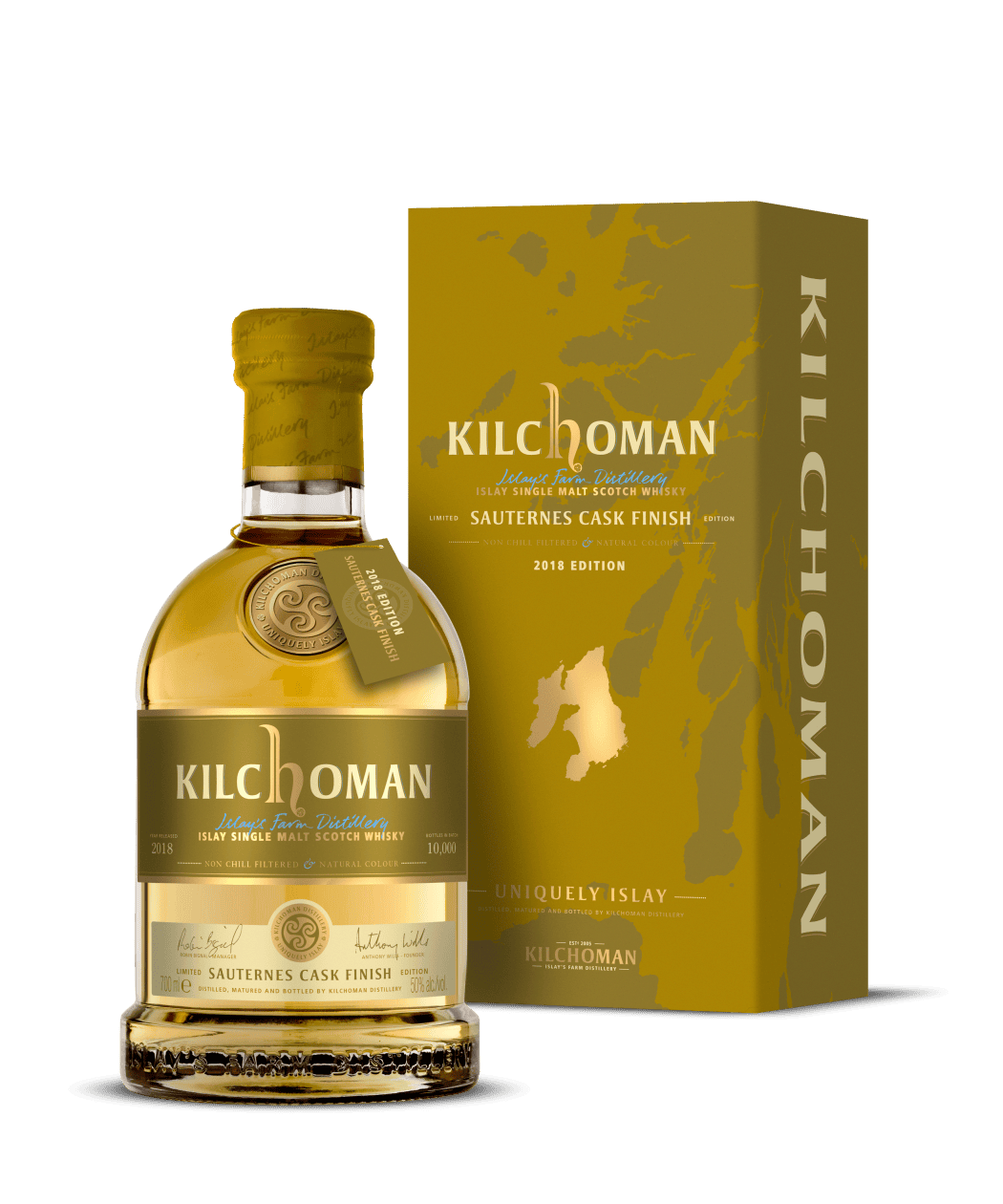
The Sauternes Cask Finish is being shipped to our distributors around the world as we speak! We will also be releasing a small number of bottles on our website from Monday the 1st of October at 2pm GMT – £78.00. On Monday, click on ‘Menu’ then ‘Whisky Shop’ to get your bottle. As with all our limited editions, this is limited to one bottle per person, sorry!
After one of the best summers for decades, the days are shortening and the wind and rain have returned. The barley farmers on the mainland have long since packed away their combines, here on Islay it’s a slightly different story. The late sowing of our barley, 6-8 weeks behind farmers on the mainland means we’ve missed the better weather for harvest and we’re now battling the autumnal weather to get the barley off the fields.
Single Variety
This year we planted a total of 97.5 acres. After trialing a new barley variety called Laureate last year, we decided to sow 77.5 acres of Concerto, a variety that we know from experience does well on Islay, and 20 acres of Octavia, a variety that we had not grown before.
It would appear that the Concerto has faired slightly better than Octavia. The Concerto ear (the barley head which holds the grains) is notably bigger, the grains bolder and there are more grains per ear, on average 28 against 22 for Octavia. This will likely mean that the Concerto barley will provide a higher yield (tonnes per acre) than the Octavia but only time will tell.
Barley varieties aside, this year we are doing things a little differently. Once harvested, in the past, all our barley (no-matter what variety) has been harvested and dried together before being malted and distilled jointly. This year the Concerto and Octavia varieties will be harvested and dried separately, before being individually malted, distilled and matured eventually becoming…
…Islay’s only Single Variety, Single Farm, Scotch Whisky…
 From left to right, Concerto and Octavia
Single Farm
Whisky enthusiasts have often speculated about the extent to which barley varieties influence the character of single malt and with recent improvements to our malt house, we will be able to give some answers.
The thing that will make this interesting is that this will be the first opportunity to isolate barley variety and how it alone impacts the character of the whisky. Other comparisons of varieties and their impact on single malt have been open to variances in growing, malting, distilling and maturation. As we have control over each aspect of production on a Single Farm, from grain to glass, everything apart from barley variety, will be identical; from growing the barley in neighboring fields, malting on the same malt floor, distilling in the same stills and maturing in the same casks in a single warehouse.
All being well, we should finish harvesting by the end of the week and come January we will begin malting and distilling the first batches of Concerto and Octavia barley, at which point we will update you on the initial findings.
Anthony Wills, Kilchoman Founder and MD “We’re excited to see how this project turns out. We fully expect there to be a difference between the varieties however the extent and particular character created by the different varieties will be very interesting to see. I look forward to tasting the spirit early next year.”
It’s not an exaggeration to say that Scotland is quite literally the greatest country in the world. It’s the birthplace of Robert Burns, Alexander Graham Bell, William Wallace and even Obi-Wan Kenobi. It’s the country that’s given us Dolly the sheep, penicillin and the world cup before the world cup was even a thing.
However, Scotland isn’t simply a singular mass of greatness. No, think of it as a collection of many incredible locations, each rich with their own identity, history, culture and traditions. Nowhere is this more evident than in the whiskies we produce. They say the only way to understand a place is to first understand its whisky.
Highlands
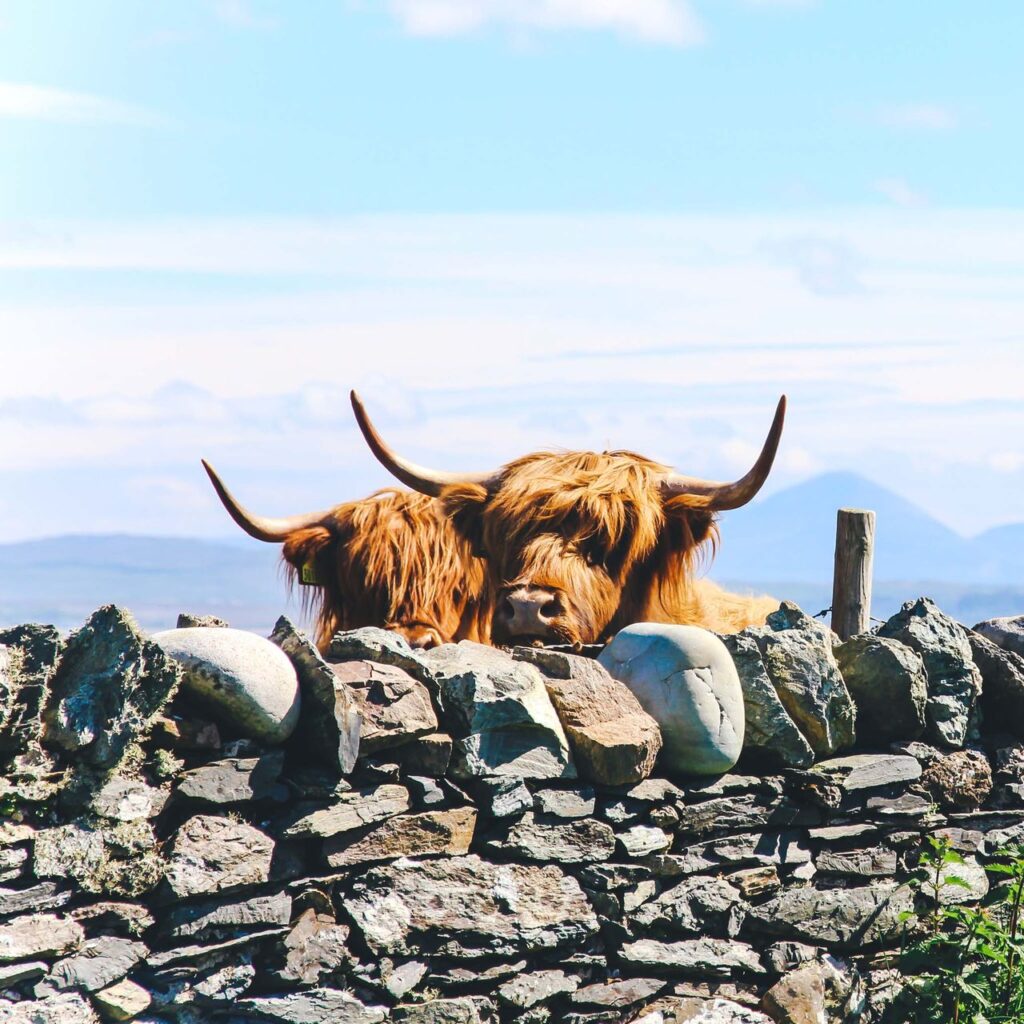
As the name suggests, this region is high – geographically and in terms of altitude. It’s also the largest area of the whisky producing regions, with most of its distilleries dotted around the coast, away from the mountains that dominate its landscape. Although treated as a single entity here, it’s possible to spend hours dissecting the map further and further into increasingly smaller areas, all with their own unique whisky profiles.
What brings together all highland whiskies are their shared history; a history linked to the Anglo-French war of 1778 to be precise. See, the English had it in for the French for a while, diverting tax revenue to help fund Britannia and her wave-ruling activities. As a result, they suddenly decided that the Scots should be paying the same taxes on malted barley and distillery capacity as they did in the south.
Well, that is unless you lived in the Highlands, in which case you could still produce whisky at the lower rate of duty. This, of course, was all on the proviso that you only used local barley, limited yourself to one small still and drank the product within the confines of the local district.
The grand result was a separation of whisky culture. The low-paying Highlands were creating quality small-batch whiskies, and the high-paying Lowlands began to export whisky to the masses. This legacy has continued with Highland whiskies known for their variety of flavours wrapped up amongst dark and earthy colours.
Lowlands
The Lowlands, an area of land between the North of England and the edge of the Highlands, have surprisingly few distilleries given the number of people living there and when you consider the fact it contains Glasgow and Edinburgh. As mentioned, this was largely due to the heinous tax system levied by parliament in the 18th Century.
However, a decision on whisky tax was approved by parliament in 1823, resulting in a massive decrease in the amount of excise duty paid on Lowland whisky.
Although it has taken some time to fully recover, the lush green fields and positively balmy climate make the Lowlands an ideal region for growing barley. This gives rise to distilleries that produce a gentler whisky than their highland counterparts, using little or no peat in production as well as a history in triple distillation. These single malts are known for being fresh, light and floral.
Speyside
If you imagine the outline of Scotland as a gaping silhouette of a hungry bird, then Speyside is its tongue – nestled in its own corner of the country. Named after the river Spey, it’s sometimes mistaken as part of the Highlands, yet its whiskies make it a very different beast indeed.
Half of Scotland’s single-malt distilleries are found in Speyside, the most densely populated whisky region in the world. The low mineral content of the Spey shaped the style and character of the whiskies in the region, although with so many single malt distilleries it is difficult to categorise all its whiskies under one umbrella.
That said, there is a ‘traditional’ Speyside character found in most of its whiskies – one which results from centuries of shared ideals in the area. These are the classic sweet flavours of honey and vanilla, as well apple and/or pear. Furthermore, a majority of Speyside whiskies are still aged in sherry casks as was the tradition, hence the often sweeter flavour profile.
Campbeltown
Nestled cosily between the isle of Arran and Islay, Campbeltown used to be home to no less than 34 scotch whisky distilleries. Nowadays, though, its number has shrunk to three. This is namely because improved transport links with the Highlands and Speyside made its goods less attractive for export in the late 1800s. Still, as we know well at Kilchoman, it’s not about how much whisky you make, it’s about what you do with it. Here, Campbeltown does not disappoint and the remaining whiskies have stuck to their roots and produce in their own style.
The Islands
It’s important to note that the disparate Scottish islands of Arran, Jura, Mull, Orkney and Skye (or the Inner Hebrides, as they’re also known) each have their own distinct scotch whiskies, formed from years of isolated tradition. However, the rocky shores and whipped ocean spray work to influence all the whiskies produced on these stunning outcrops, creating peated and unpeated whisky with authentic charm. Summed up, the island whiskies may be very different, but they all hark back to the sea. Each combines a range of caramel tones with a slightly salty undercurrent that brings a taste of the shore to your glass.
Islay
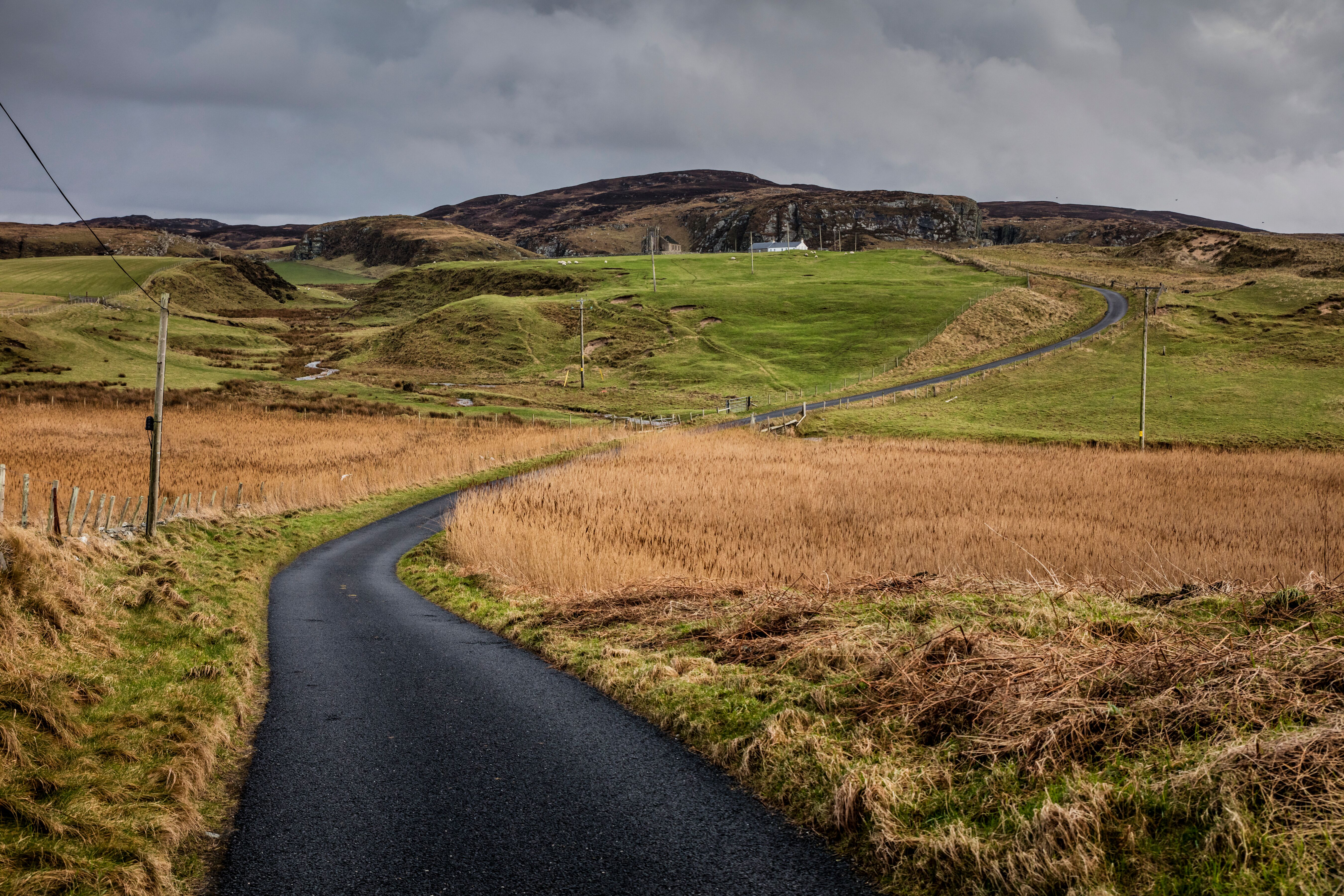
Now we come on to the main event, without being too biased of course. Although it’s technically the southernmost island of the Inner Hebrides, the isle of Islay is quite rightly considered a whisky region all on its own. Famous for its rich whisky pedigree, it’s thought that the first whisky borne out of these picturesque shores was distilled by Irish monks in the 14th century. Since then whisky has captivated the island and become the life and soul of Islay, with one feature helping Islay whiskies stand out from the rest – peat!

The climate of Islay means that it’s covered with characteristic peat bogs. These thick bogs provided the fuel used to dry our malted barley for milling, mashing and distilling. The impact this has on the malt is a fantastic smoky character which works its way into the core of Islay whiskies. It’s this distinct history and character that we at Kilchoman have tried to capture and distil into every glass of single malt we produce. Being the only Single Farm scotch whisky distillery on Islay that still carries out every stage of production – from growing the barley on the farm to bottling on site, we want to use all Islay has to offer.
Of course, there will always be disagreements over what is and isn’t defined as a region. And to be frank, we don’t really care. In our eyes there’s only one region (apart from Islay of course) that matters: a place that forms the lifeblood of civilised culture. A place that Obi-Wan is proud to call home. So raise a dram to Scotland, quite literally the greatest country in the world.


The Kilchoman European Tour is back in 2018! It has been three years since we packed up the Land Rover and took it on a tour around Europe, so the time has come for Kilchoman to get on the road once again, with a few new additions…
The 2018 Tour will be our biggest and best yet; covering more miles over a longer period with bigger and better tour events than ever before. This year also welcomes the arrival of the new Kilchoman Trailer!
We have done away with the regular sit-down tastings, so come along for an evening of Machir Bay Old Fashion cocktails served from the Exhibition Trailer, pair Kilchoman with Scottish Highland cheese and Atlantic Sea Salt chocolate, and taste through a range of our single malt whisky with the team from the distillery (including the Tour Bottling of course!). We’ll be there to share a few stories as well as a few drams as we make our way around Europe.
The Route
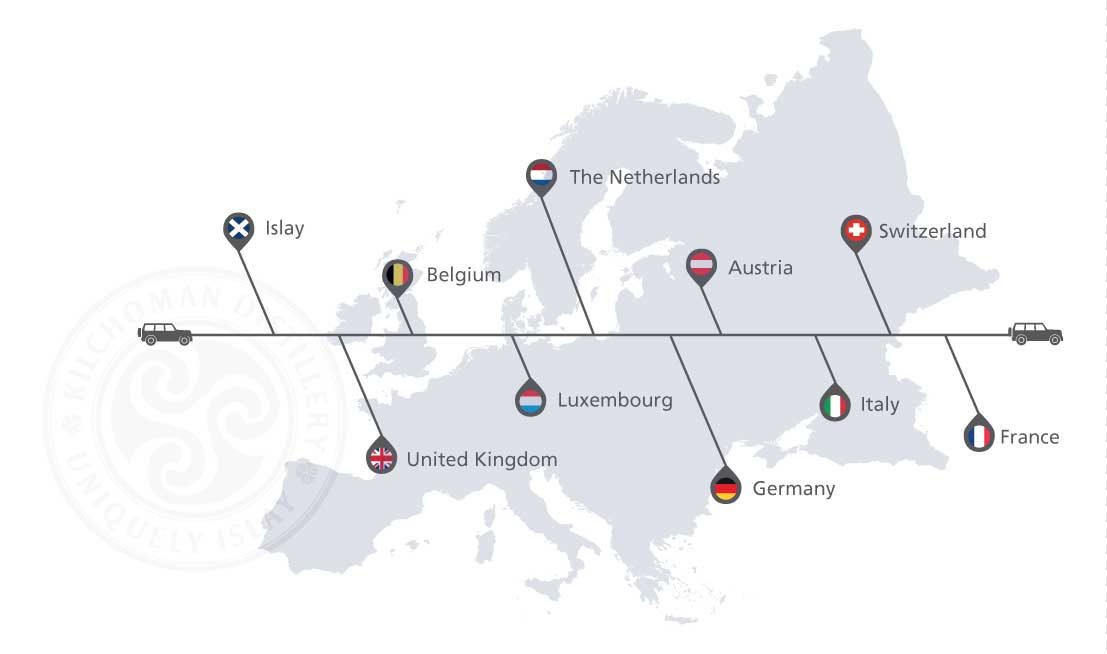
This year’s tour will start on Islay, visiting nine countries over seven weeks, covering over 7,000 miles – Islay – Scotland – England – Belgium – Luxembourg – Netherlands – Germany – Austria – Italy – Switzerland – France – Islay. Click HERE to find out the exact dates and route we will be taking.
The Vehicle
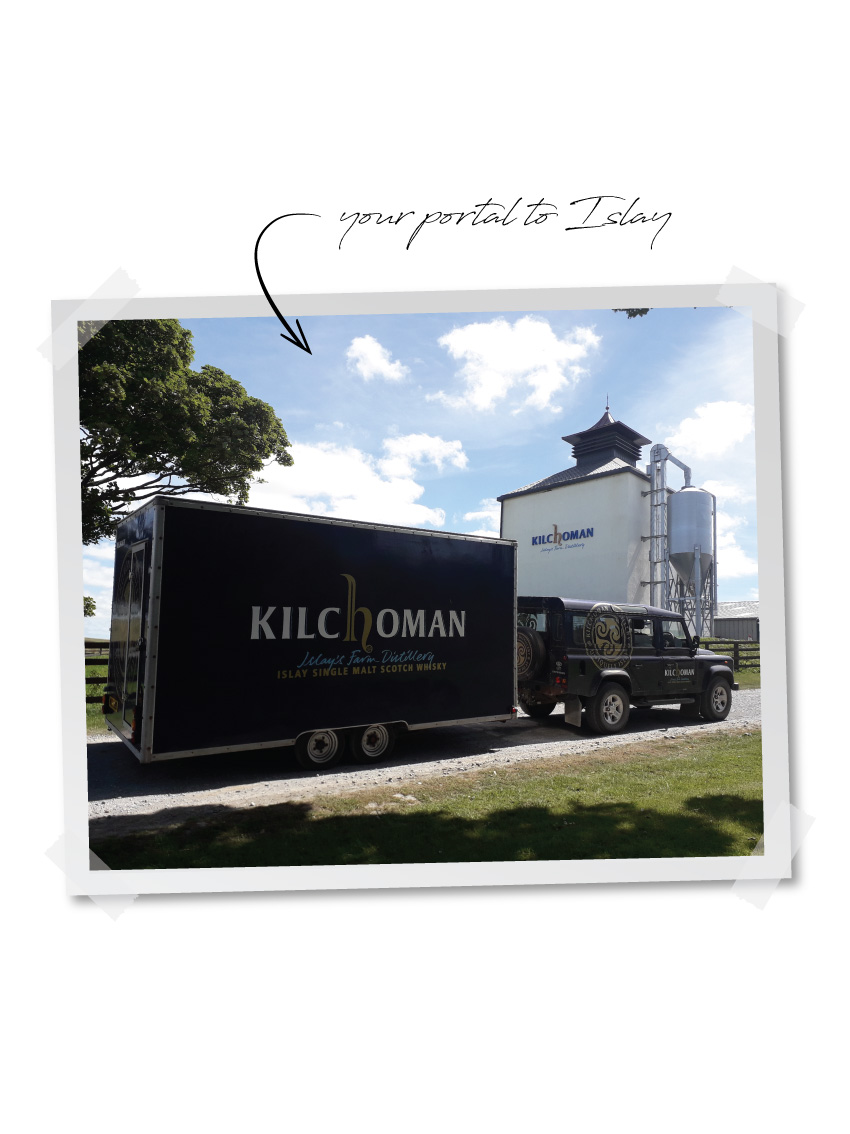
The Kilchoman Land Rover has been re-branded with a fresh wrap and will be towing the new Exhibition Trailer.
The Bottle
A special bespoke, individually numbered, limited edition bottle will be released for the 2018 European Tour. Just 2,310 Cask Strength Machir Bay bottles will be available exclusively from the selected venues along the tour.
Continue to follow the European Tour news section for updates and we will see you soon!
The island of Islay is famous for its peated single malt whisky, beautiful scenery and remarkable history. The weather, on the other hand, can be infamous. Whilst temperatures rarely fall below freezing, wind speeds sometimes exceed 100mph and it once rained for over 90 days in a row. Both Islay and Islay Whiskies, none more so than Kilchoman, are a product of this unique environment. So let’s look at how the weather influences our whisky.

Savage winter winds
Islay’s position 15m (25km) west of mainland Scotland leaves it entirely exposed to gales that sweep in from the Atlantic Ocean. This means that Islay, like many of our neighbouring islands, has very few trees. In place of wood, generations of Ileach’s (people from Islay) have turned to peat as their main fuel source, burning it both in their homes and when drying their barley ahead of distillation. Though it doesn’t produce as much heat as wood, peat was readily available at a time when Islay rarely traded with mainland Scotland. As the island modernised, cutting peat for domestic use has become less common, however for Islay’s more traditional distilleries, Kilchoman included, peat remains crucial to creating the briny peat smoke character for which Islay whiskies are famous.

Rain, wind, barley and geese
As the old saying goes, ‘today’s rain is tomorrow’s whisky’ and with nine working distilleries and an average of 191 days of rain each year it shouldn’t come as a surprise to know that Islay has plenty of whisky!
Whilst the rain might provide us with something no distillery can do without; water, it poses an unpredictable challenge to our farmers. That said, there is little we can do to control the weather, a more direct worry is the 40 – 50,000 migrating geese which winter on Islay every year. Farmers, us included, must protect their seed from the hungry geese, waiting until they leave in mid-April before sowing our barley, 1-2 months behind mainland farmers. This has the knock-on effect of a late harvest, leaving us exposed to deteriorating early autumn weather as we wait for the barley to ripen.
All of these elements, rain, wind, barley and geese play a part in the chemical makeup of Kilchoman barley, affecting how easily it is malted and peated, the amount of spirit we can produce from each ton and of course the final character of our mature single malt whisky.

Islay’s mild temperatures
Perhaps the biggest impact on Kilchoman is Islay’s mild climate. Islay’s location on the south west coast of Scotland places it directly in the path of the Gulf Stream, an underwater river of warm ocean water flowing from the Gulf of Mexico to the western Isles, ensuring that Islay’s weather, though wet and windy, is consistently warmer than the mainland, especially during the cold winter months. From summer to winter, the average temperatures here on Islay only various 10°C on average, from 7°C (45°F) in the winter to 17°C in the summer (63°F).
This mild climate together with our traditional dunnage warehouses, create the perfect environment for steady and consistent maturation of our whisky, allowing the spirit to be gently drawn in and pushed out of the cask as the warehouse temperatures peacefully rise and fall over the course of the year. This interaction between the spirit and the cask is the basis of maturation, controlled entirely by the climate of where the whisky is aged.
Kilchoman is as much a product of Islay’s climate as any other part of the whisky-making process. From sowing the barley to maturing our whisky the island’s unique weather plays its part in shaping Kilchoman’s distinct character.

Click here to stay in the know with all the news from the distillery and info about upcoming releases by signing up to our Kilchoman Club.
Islay’s only Single Farm Single Malt
The latest instalment of our 100% Islay range is to launch on Monday the 10th of September. Released in limited runs annually, the 100% Islay range is our only expression distilled solely from barley grown and malted here at the distillery.
This, the 8th Edition, is a vatting of 23 bourbon barrels and 7 oloroso sherry butts filled between 2008 and 2012, bottled at 50% ABV. A total of 12,000 bottles have been released worldwide, hitting shelves from the 10th of September.
The 8th Edition can trace its origins to the fertile soil of the Kilchoman barley fields. It was here that we harvested Optic barley between 2007 and 2011. Once harvested the barley was hand malted, peated and distilled before being matured in a combination of bourbon and sherry casks. The combination of cask types allowing for an elegant balance of rich spices, citrus sweetness and earthy peat smoke.
Bottled on site, the 100% Islay 8th Edition is without colouring or chill-filtration, standing alone as Islay’s only Single Farm Single Malt, 100% Islay – from barley to bottle.
Though the name might suggest a heavier peating level than our standard 50ppm offerings; Machir Bay, Sanaig and others, the 100% Islay range is in fact peated to a lower level of roughly 20ppm. Although this is not an exact measurement as the small batches and old-style techniques make it almost impossible to peat each batch to exactly the same level.
The key difference between this and previous batches of the 100% Islay is the addition of sherry cask maturation. The seven oloroso sherry casks included in the vatting give the whisky added depth and richness compared to the fresh fruits and vanilla of previous editions.
Anthony Wills Kilchoman Founder and MD, “The 100% Islay range was the reason we built Kilchoman, we wanted to take whisky-making back to the grass root traditions of the industry, where we had the ability to influence each stage of the process to maximise the character of our whisky. Part of that is barley; how it’s grown, malted and peated, part of that is slow steady hand distillation and part of it is casks; filling casks that pair well with your spirit and selecting the right balance of casks when they reach maturity. Great whiskies are not a result of a single part of the process, they’re the outcome of time and passion invested at every stage of the process”

The 100% Islay 8th Edition is on its way to retailers and bars around Europe. It might take a little longer to reach countries further afield, but don’t worry, it’s on the way and will get there! We will also be releasing a small number of bottles on our website from Monday the 10th of September at 2pm GMT – £73.50. On Monday, click on ‘Menu’ then ‘Whisky Shop’ to get your bottle. Due to the number of bottles, this is limited to one bottle per person, sorry!